

Complete Terrazzo Guide for Commercial Projects (2026)
Terrazzo is a composite surface material made by combining decorative aggregates with a binding system to create a durable and visually distinctive finish. Traditionally used for flooring, terrazzo is now widely used on walls, countertops, staircases, facades, and large-format architectural panels in both commercial and residential projects. Modern terrazzo is valued not only for its aesthetic versatility but also for its long service life, low maintenance requirements, and compatibility with contemporary sustainable building standards.
This guide will trace the development of terrazzo and explain why it is popular in engineered stone.
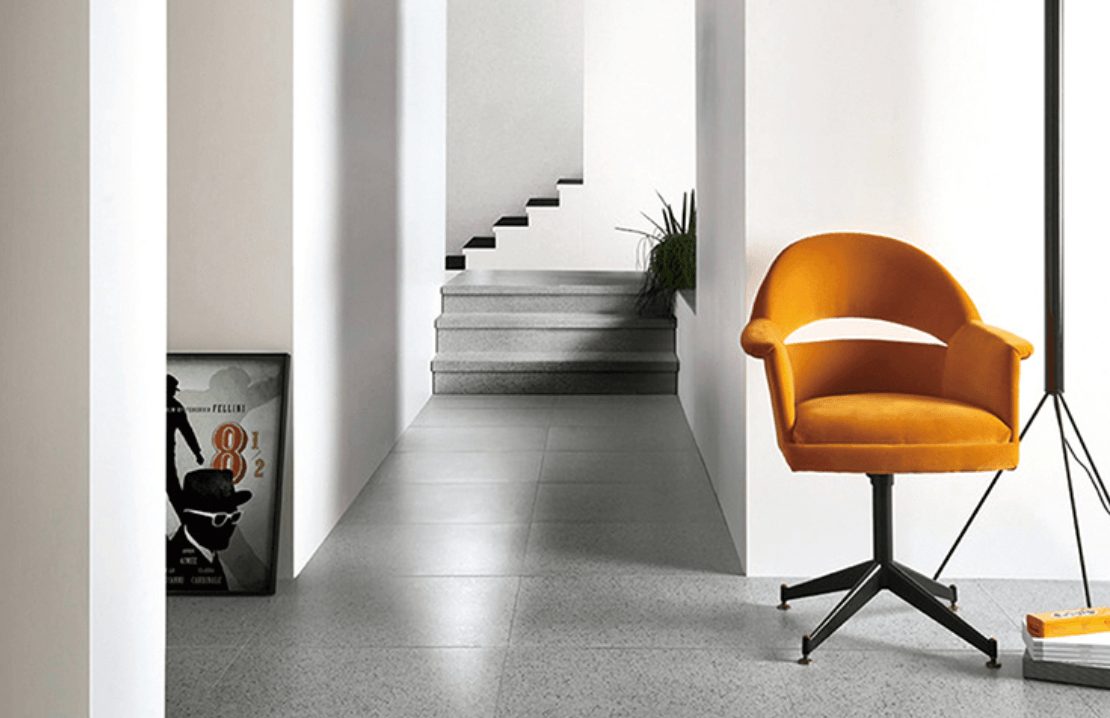
Anatomy of Terrazzo: Materials & Components
Every terrazzo floor is a custom creation. Its appearance is dictated by it component, including the aggregates, the binder, and the divider strips
Aggregates, these are the "chips." While marble is traditional, modern designers use recycled glass, mother-of-pearl, granite, and even plastic to create unique textures. Binder is the matrix (epoxy or cement) that provides the background color. Divider strips are usually made of zinc, brass, or plastic. These strips allow for color transitions and help control expansion and contraction, preventing cracking.
Terrazzo’s History
Terrazzo stands as one of the earliest examples of "sustainable design" in human architecture. Archaeological findings indicate that the rudimentary form of terrazzo dates back to the Neolithic era—specifically around 9,000 BC—with traces discovered at architectural sites in Turkey and the Near East.
In 15th-century Venice, marble artisans began embedding leftover marble scraps from the construction of opulent palaces into a matrix of clay or lime mortar. The surface was then manually ground smooth using a heavy tool known as a "Galera." Finally, goat’s milk was applied as a sealant to enhance the luster and vibrancy of the embedded marble fragments. This is today's Terrazzo.
In the 20th century, terrazzo evolved into an iconic material of the Circular Economy. Aggregates used have expanded far beyond traditional stone to include recycled glass from electronics, discarded seashells, and even industrial waste slag. Its inherently low carbon footprint makes it a powerful asset in achieving LEED Green Building certification.
Architects, developers, and contractors are now expected to meet stricter fire regulations, sustainability targets, and indoor environmental standards. This shift has accelerated the development of inorganic terrazzo systems that reduce resin use and improve fire performance compared with conventional epoxy-based materials.
Types: Terrazzo Family Tree
To the untrained eye, all terrazzo might look like "stone chips in a binder." In this guide, Wayon will spell out terrazzo types into Binder Systems and Installation Forms. Help you distinguish them correctly.
By Binder System... ...
The binder is the "glue" that holds the aggregates together. Choosing the right chemistry determines UV stability, fire rating, and indoor air quality.
Epoxy Terrazzo
Epoxy terrazzo is a two-part resin system (epoxy) mixed with decorative aggregates. It offers an unlimited color palette. It is the thinnest system (approx. 3/8" or 10mm) and highly resistant to chemicals and stains.
But it is not for outdoor use. Epoxy is an organic material that degrades (yellows and becomes brittle) under UV exposure. It is also non-breathable, meaning it can fail if there is high moisture vapor transmission from the concrete subfloor.
Cementitious Terrazzo
As a traditional stone, cementitious terrazzo is a traditional mix of Portland cement and water. Its main advantage is breathability and time-tested durability. Ideal for historic restorations.
Cementitious terrazzo also has a limitation, cracking due to shrinkage. It requires a thick bed (2.5" to 3") and has a very long on-site curing/grinding cycle.
Inorganic Terrazzo (Wayon’s Core)
Inorganic terrazzo is a specialized hybrid that uses eco-friendly inorganic binders without resin. It merges the durability of cement with the stability of modern engineering. It is Class A1 fire-rated, zero-VOC, and completely UV-stable.
Inorganic terrazzo is the only professional choice for 2026 exterior facades and high-traffic public infrastructure.
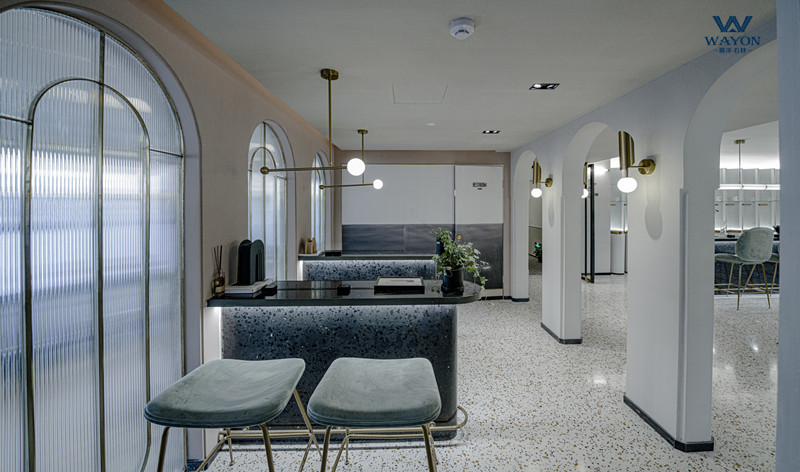
By Installation Form... ...
How the material arrives at the job site dictates your construction timeline and labor costs.
Poured-in-Place
The installation of the Poured-in-Place involves mixing and pouring directly onto the subfloor, followed by on-site grinding and polishing. It is best for creating a truly monolithic, seamless floor with no visible joints. However, its high labor costs and a “wet” construction site for weeks make this increasingly difficult for fast-track projects.
Pre-cast Terrazzo Slabs
Slabs are manufactured in a controlled factory environment using high-frequency vibration and vacuum pressing, then shipped as finished "large-format" boards. Idea for consistent quality control, rapid installation (similar to stone or tile), and heavy-duty commercial applications.
Wayon Stone Edge: Our pre-cast slabs minimize on-site grinding, significantly reducing silica dust and labor hours.
Terrazzo Tiles & Slabs
These smaller modular units are often used for residential flooring or small-scale commercial upgrades. Terrazzo tiles are the common choice for budget-conscious projects or DIY-friendly applications where a full poured system is overkill.
Face a project with extreme constraints?
Have a complex project, such as ultra-thin renovations over existing floors or environments exposed to harsh, acidic cleaning agents? Wayon’s Terrazzo-look Porcelain Slabs offer a 6mm–12mm alternative. While it lacks the "authentic stone depth" of real terrazzo, its zero-porosity and extreme hardness make it a strategic fallback for 2026 utility spaces.
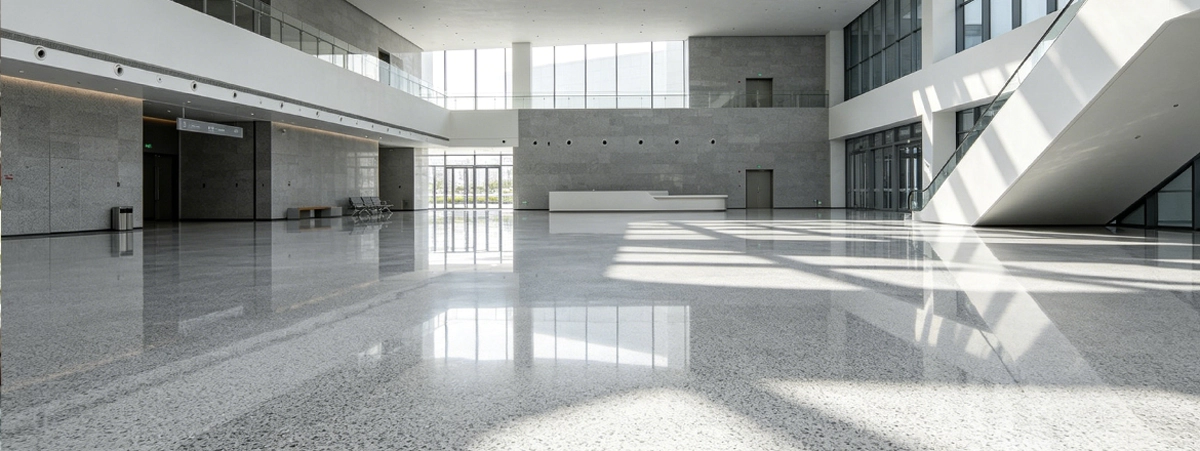
Terrazzo vs Other Architectural Materials
Architects, developers, and contractors often compare performance, maintenance requirements, sustainability, and long-term value before making a specification decision. The table below compares terrazzo with several commonly used architectural materials across the factors most relevant to modern construction projects.
|
Material |
Durability |
Maintenance |
Expected Lifespan |
Sustainability |
Fire Performance |
|
Terrazzo |
Extremely durable under heavy traffic |
Low maintenance with periodic polishing |
40 to 100+ years |
High due to recycled aggregates and long lifecycle |
Excellent, especially inorganic terrazzo |
|
Quartz |
Strong surface performance but sensitive to UV exposure outdoors |
Low maintenance |
15 to 25 years |
Moderate, contains engineered resin binders |
Moderate due to resin content |
|
Porcelain Slab |
Highly resistant to scratches and stains |
Very low maintenance |
20 to 50 years |
Moderate to high depending on manufacturing process |
Excellent |
|
Marble |
Elegant but softer and more vulnerable to scratching and staining |
Requires sealing and regular care |
20 to 50 years |
Natural material but quarrying impact is significant |
Excellent |
|
Granite |
Extremely hard and impact resistant |
Moderate maintenance with sealing required |
30 to 100 years |
Moderate due to extraction and transportation impact |
Excellent |
|
Concrete |
Durable but prone to cracking and surface wear over time |
Requires sealing and repairs |
20 to 40 years |
Moderate, high cement consumption affects carbon footprint |
Excellent |
|
Vinyl Flooring |
Lower resistance to wear and heavy commercial traffic |
Easy daily cleaning but difficult to repair |
10 to 20 years |
Low due to synthetic composition and shorter replacement cycle |
Poor to moderate |
Among these materials, terrazzo flooring stands out for its balance of durability, design flexibility, and long-term lifecycle value. Unlike many short-lifecycle finishes, terrazzo slabs can often be refinished rather than replaced, making them particularly attractive for airports, hospitality projects, healthcare facilities, and other high-traffic environments. Inorganic terrazzo systems further improve sustainability and fire safety performance, which is increasingly important for ESG-focused commercial developments.
Terrazzo Technical Specifications Explained
At Wayon Stone, we believe that understanding the "DNA" of your surface materials is the key to a successful, long-term project. The following table summarizes the typical performance of terrazzo based on our latest laboratory data:
|
Specification |
Terrazzo Performance Value |
|
Mohs Hardness |
5–6 |
|
Water Absorption (%) |
0.08% – 0.12% |
|
Dry Flexural Strength |
14.4 – 15.5 MPa |
|
Volume Density |
2.49 – 2.57 g/cm^3 |
|
Abrasion Resistance |
361 – 444 mm (Standard) |
|
Impact-resistant(J) |
1.6-2.1 |
|
Gloss |
33.6-49.3 |
|
Fire Resistance |
Class A / Non-flammable |
Indoor vs. Outdoor Terrazzo: Technical Selection
Indoor and outdoor terrazzo applications require different performance considerations.
- Indoor terrazzo flooring often prioritizes aesthetics, seamless finishes, and low maintenance, while outdoor terrazzo must withstand environmental exposure and temperature fluctuations.
- UV stability is especially important for exterior applications because some resin-based terrazzo systems may discolor when exposed to prolonged sunlight.
- Freeze-thaw resistance is also critical in cold climates, where moisture expansion can cause cracking.
- Outdoor terrazzo typically requires anti-slip surface finishes to improve safety in wet conditions. Low water absorption helps prevent staining and weather damage. Proper expansion joints reduce issues caused by thermal movement in changing temperatures.
The binder’s chemistry is also a main factor in choosing terrazzo. While epoxy terrazzo offers vibrant colors for space, it degrades under UV light, making inorganic systems better suited for exterior use. It efficiently manages thermal movement, maintaining structural integrity during extreme temperature fluctuations.
Common Problems of Terrazzo Failing
Understanding the most common terrazzo problems helps contractors, architects, and property owners reduce project risks and improve long-term surface quality.
Cracking
Cracking is often caused by substrate movement, insufficient control joints, or structural settlement beneath the terrazzo flooring system. Proper expansion joint planning and stable substrate preparation are essential for minimizing crack formation in both poured and precast terrazzo applications.
Pinholes
Pinholes may appear during the polishing stage when small air voids remain trapped inside the terrazzo surface. Poor compaction, inconsistent mixing, or inadequate grouting can increase the likelihood of pinholes. High-quality manufacturing processes and proper vacuum vibration technology help create denser terrazzo slabs with fewer surface imperfections.
Yellowing
Yellowing is commonly associated with epoxy terrazzo exposed to prolonged UV radiation. Therefore, inorganic terrazzo and cement-based systems generally offer better UV stability for outdoor projects.
Staining
Most terrazzos have a water absorption rate, though it is low. Porous surfaces without adequate sealing are particularly vulnerable. Routine sealing and prompt cleaning significantly reduce the risk of permanent discoloration.
Delamination
Delamination happens when the terrazzo layer separates from the substrate. Moisture issues, weak bonding adhesives, or improper installation techniques are common causes. Moisture testing before installation and correct adhesive selection.
Uneven Aggregate Exposure
Inconsistent grinding depth or poor aggregate distribution during production may create irregular visual patterns. Factory-controlled manufacturing and experienced polishing teams are essential to achieving a balanced, uniform terrazzo surface.
Maintenance Protocol of Terrazzo
One of the greatest benefits of terrazzo is its simplicity. Because it is a through-body material, it does not rely on a thin surface glaze that can wear away.
1. Cleaning Routines
- Daily/Weekly: Use only pH-neutral cleaners. Acidic or alkaline cleaners can "eat" into marble aggregates or damage the binder.
- Method: Neutralize the floor with clean water and mop; for large commercial spaces, automatic scrubbers with soft pads are highly efficient.
2. Resealing and Protection
- Initial Treatment: Both cementitious and epoxy systems must be treated with at least two coats of an appropriate sealer after installation.
- Frequency: High-traffic areas may require resealing every 1–3 years to maintain the impermeable finish and prevent staining.
3. Refinishing and Repairability
- Restoration: Unlike porcelain, which must be replaced if the surface is damaged, terrazzo can be re-polished and re-ground. This process removes the top micron of the material, revealing a brand-new surface.
- Patching: If a chip occurs, installers use a "bracketing" system to mix-match chips and binder to fill the void, making the repair virtually invisible.
Developer's Edge: In high-traffic zones like airports or schools, terrazzo is designed to last the life of the building.
Wayon Pre-cast Density Factor
Maintenance costs are directly tied to a material’s porosity. At Wayon, our pre-cast inorganic slabs utilize high-frequency, high-pressure forming to create a molecular bond with a volume density of 2.49–2.57 g/cm^3. This industrial process achieves a water absorption rate of only 0.08% to 0.12%, significantly reducing the risk of deep-set stains and bacteria growth compared to more porous on-site pours.
How to Choose the Right Terrazzo Supplier
By specifying a factory-controlled material, developers ensure a predictable maintenance schedule and a floor that contributes to LEED points through zero-VOC emissions and local sustainability.
- Selecting a premier terrazzo supplier requires vetting both technical and operational excellence.
- Prioritize factory capability; high-pressure forming ensures maximum density and durability.
- Ensure strict batch consistency and precision slab calibration to minimize installation labor costs and waste.
- Always verify fire certifications (Class A) and global project references to guarantee safety compliance and long-term reliability.
- Assess customization ability for bespoke aggregate blends.
- Confirm that their MOQ aligns with the scale of your specific project.
- Evaluate delivery capacity to ensure seamless logistics.
Wayon Stone integrates these benchmarks into our inorganic production, providing developers with high-performance, predictable surfaces.