

How to Verify the Quality of Stone Slabs Before Bulk Purchasing
Bulk purchasing stone slabs involves a level of quality control that goes beyond selecting an attractive sample. A single approved slab can confirm the material, finish, and general appearance, while a large order must also demonstrate consistency across production batches. Small variations in color, thickness, surface finish, or structural condition can become significant when hundreds of slabs are involved.
A reliable verification process starts before production and continues through final shipment. Clear specifications establish the acceptance criteria, sample approval provides a visual reference, and batch inspection confirms production consistency. Dimensional checks, surface inspection, technical documentation, and shipment verification then provide additional evidence for the final purchasing decision. This approach gives buyers a practical framework for assessing stone slab quality and creates a documented basis for accepting bulk orders with greater confidence.
Set Clear Quality Standards Before Placing a Bulk Order
Quality verification starts with a clear purchasing specification. Before production begins, buyers and suppliers should agree on the characteristics that determine whether the stone slabs meet the order requirements.
The specification should identify the stone type, product or color code, slab dimensions, thickness, surface finish, and intended application. For natural stone, the acceptable range of color, veining, mineral variation, and other natural characteristics should be established through approved samples or reference images.
Dimensional tolerances and project-specific technical requirements should also be documented. Required test values or certifications can be included when material performance is important to the application.
A written quality benchmark gives both parties the same reference throughout production and inspection, making the final approval process more objective and reducing ambiguity during bulk order verification.
Compare the Bulk Slabs With the Approved Sample
An approved sample provides the visual reference for a bulk stone order. Production slabs should be compared with this reference to assess consistency across the actual manufacturing batch.
Focus on background color, overall tone, veining, pattern distribution, and surface finish. The comparison works best at three levels. First, compare production slabs with the approved sample. Next, compare individual slabs within the same bundle. Finally, compare multiple bundles from different parts of the order.
Natural stone can show variations in veining, mineral composition, and background tone. These characteristics can remain acceptable when they fall within the agreed reference range. For bulk purchasing, the objective is to determine whether the overall batch maintains the appearance established during sample approval.
This comparison also helps identify batch inconsistencies early, giving buyers an opportunity to clarify specifications or address quality issues before the shipment is finalized.
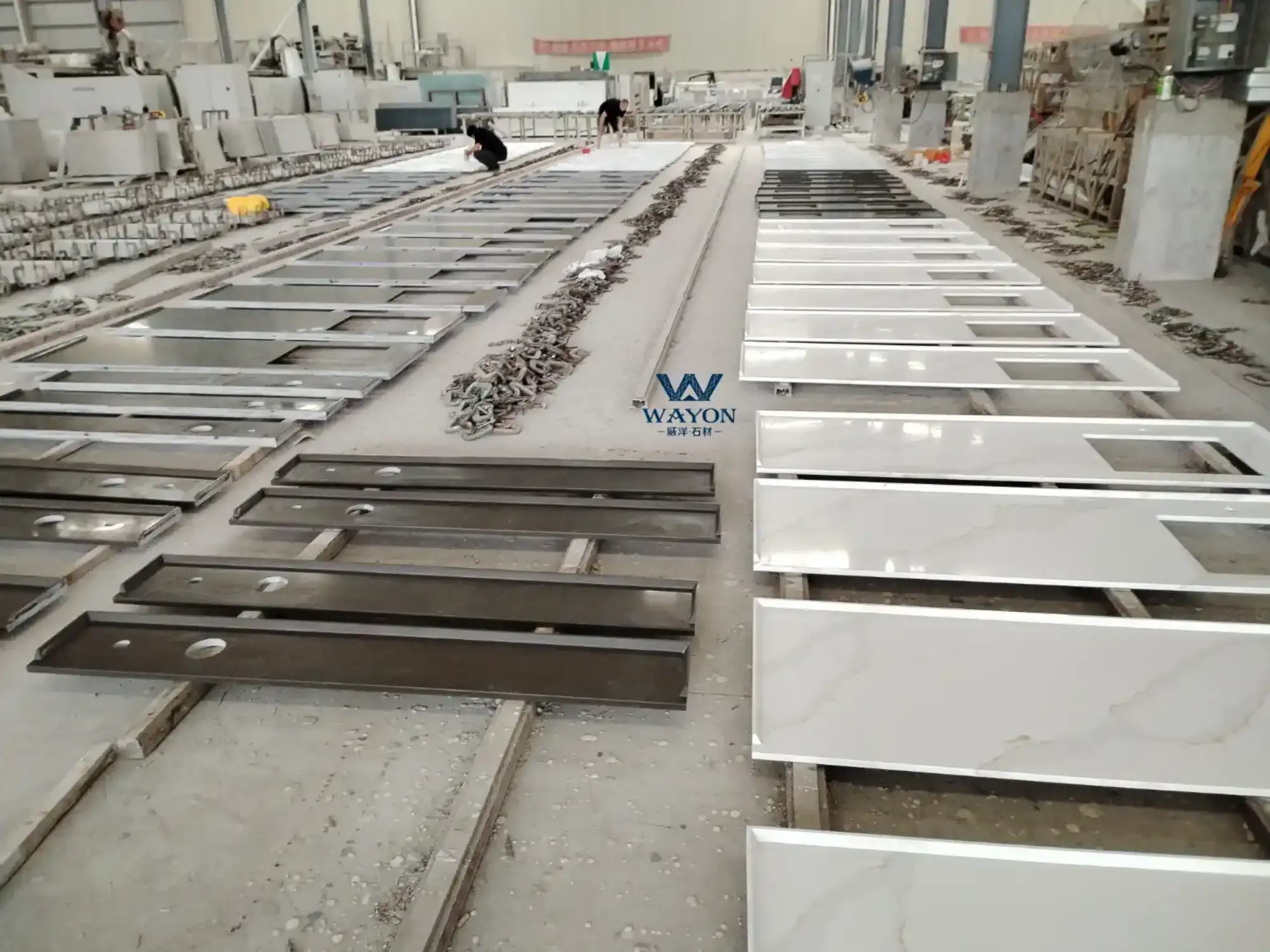
WAYON Quartz vanity slab
Inspect Dimensions, Surface and Structural Quality
After checking batch consistency, inspect the physical condition of the slabs systematically. Dimensional measurements and physical inspection together provide a practical basis for evaluating fabrication readiness.
Check Dimensions and Flatness
Measure length, width, and thickness against the agreed specifications. Thickness should be checked at several points to identify variation across the slab. Flatness and diagonal consistency are also important for fabrication accuracy.
Inspect Surface Quality
Examine the surface for scratches, stains, pinholes, polishing marks, filler visibility, and inconsistent finishing. The surface should maintain a consistent appearance across the usable area.
Check for Structural Defects
Inspect for cracks, problematic fissures, chips, fractures, and edge damage. Backing mesh or reinforcement should also be checked when included in the product specification.
Natural veins, mineral marks, and other geological features are not automatically defects. Their acceptance depends on the agreed appearance range and their effect on fabrication, installation, or intended use.
Verify Quality With Documents and Basic Testing
Visual inspection provides important information about a slab's appearance and physical condition. Technical documentation adds measurable evidence, particularly for commercial, architectural, and other specification-driven projects.
Request the technical specifications, relevant test reports, certificates, and other documents required for the project. Check that the material type, product specification, testing method, and declared values correspond to the stone being purchased.
Testing requirements should reflect the material, intended application, applicable standards, and project specifications. Depending on the project, relevant properties may include water absorption, density, strength, or abrasion resistance. For high-value orders or projects with strict performance requirements, independent laboratory testing can provide additional verification.
The most useful approach is to connect three sources of information: the specified material, documented performance, and actual bulk order. This gives buyers a stronger basis for assessing whether the shipment meets the agreed requirements.
Inspect the Shipment Before Final Approval
The final inspection confirms that the slabs prepared for shipment match the approved specifications and production requirements. At this stage, the focus shifts from individual quality characteristics to the overall condition of the order.
Review the inspected slabs against the agreed criteria for material, appearance, dimensions, surface finish, and structural condition. Minor variations that remain within the approved range can be documented as acceptable. Any borderline issue, such as noticeable color variation or a measurement close to the specified tolerance, should be clarified before shipment. Significant cracks, serious damage, incorrect specifications, or substantial batch inconsistencies require corrective action or replacement.
The final check should also confirm the ordered quantity, slab or bundle identification, packaging condition, edge protection, and loading arrangement. Clear photographs and inspection records provide useful evidence for both parties.
Once the physical shipment and supporting records have been verified, the order can proceed to final approval and dispatch.
A Practical Quality Checklist for Bulk Stone Slab Buyers
A structured checklist makes bulk inspection easier to perform consistently across different orders and suppliers. The following points cover the essential checks before approving a stone slab shipment.
|
Check |
Key Point |
|
Product |
Confirm the correct material, product code, and specification |
|
Sample |
Compare production slabs with the approved reference |
|
Color |
Verify that variation remains within the agreed range |
|
Dimensions |
Measure slab size, thickness, and flatness |
|
Surface |
Check polishing, texture, stains, scratches, and other visible defects |
|
Structure |
Inspect cracks, fissures, chips, and edge damage |
|
Documents |
Confirm required technical reports and specifications |
|
Shipment |
Verify quantity, bundle identification, packaging, and loading |
Inspection records should include slab or bundle references, measurement results, and clear photographs of significant findings. Keeping these records with the approved sample and purchase specifications creates a traceable quality record for the order.
For repeat purchases, the same checklist can be reused and refined based on previous inspection results. This creates a more consistent quality control process as the supplier relationship develops.
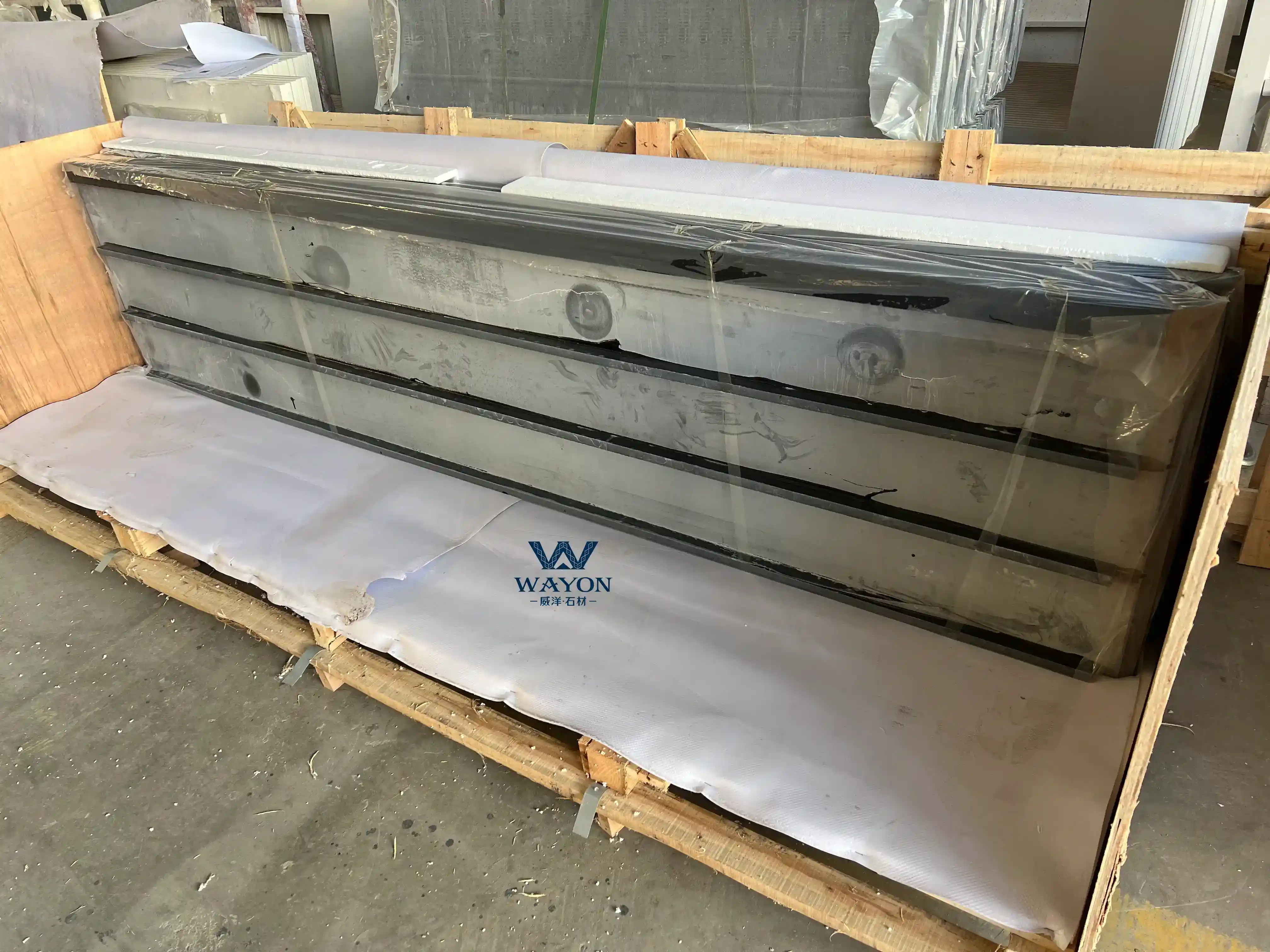
WAYON Quartz wooden box packaging
How Wayon Supports Quality Verification for Bulk Orders
Quality verification becomes more efficient when the supplier follows clear specifications throughout the order process. Wayon supports bulk stone projects by aligning material selection, product specifications, processing requirements, and quality checks with the buyer's expectations.
Sample confirmation provides a reference before mass production begins, while production quality control helps maintain consistency throughout the order. For projects involving specific dimensions, finishes, or fabrication requirements, specifications can be confirmed in advance and applied throughout processing.
Pre-shipment inspection provides another opportunity to verify the finished slabs before loading. Product identification, quantity, appearance, processing quality, and packaging can be reviewed as part of the final order preparation.
For importers, wholesalers, fabricators, and project buyers, this structured approach provides greater visibility from sample approval to shipment.
If you are planning a bulk stone slab purchase, contact Wayon to discuss your material specifications, quality requirements, and inspection needs before production begins.
FAQ
Can a stone slab sample represent a bulk order?
A sample establishes the expected material, color, pattern, and finish. Bulk slabs should still be inspected for consistency because production may involve natural or manufacturing variation.
How do you check the thickness of a stone slab?
Measure thickness at several points across the slab with a suitable measuring tool. Multiple measurements provide a more reliable indication of dimensional consistency than checking one location.
Are natural fissures considered defects in stone slabs?
Not necessarily. Natural fissures can be part of certain stone types. Their acceptance depends on their size, location, appearance, and potential effect on fabrication or the intended application.
Should every slab be inspected before shipment?
For large orders, sampling can provide an efficient approach when supported by clear acceptance criteria. High-value or highly customized projects may justify more extensive inspection.
When is third-party testing recommended?
Independent testing is particularly useful for high-value projects, new supplier relationships, or applications with specific technical performance requirements. The testing scope should follow the applicable standards and project specifications.
How many stone slabs should be inspected in a bulk order?
The inspection quantity depends on order size, material consistency, project requirements, and the supplier's quality history. A representative sample from different bundles and production batches can provide useful coverage for routine orders.
When should stone slab quality be inspected?
Quality should be checked at several key stages, starting with sample approval and continuing through production and final shipment. Pre-shipment inspection is particularly important because it verifies the actual slabs prepared for delivery.
How can buyers verify a supplier's stone quality claims?
Ask for approved samples, current product specifications, relevant test reports, production or inspection records, and clear photographs of the actual order. For new suppliers or high-value projects, an independent inspection can provide additional assurance.