

Sintered Stone vs Quartz Stone Slab: Which is Better?
Sintered stone and quartz stone slabs can perform well in demanding interior projects, but their characteristics suit different environments, fabrication requirements, and design priorities. Sintered stone is particularly suited to applications exposed to heat, sunlight, and changing environmental conditions. Quartz offers strong performance for many interior surfaces while providing extensive design possibilities and familiar fabrication processes for stone professionals.
For architects, designers, contractors, and stone fabricators, the more useful question is not simply which material is stronger. The key is determining which slab is better suited to the specific project. This guide compares the two materials through practical selection criteria, including heat exposure, UV resistance, fabrication, design consistency, daily use, and application environment.
The Real Difference Starts With Composition
The performance of a slab is closely connected to how it is formulated and manufactured. Sintered stone and quartz stone use different material systems, which gives each one a distinct performance profile.
Sintered stone is produced from selected natural minerals through a high-pressure and high-temperature process. The resulting slab has a dense, highly inorganic structure that provides strong resistance to heat, UV exposure, moisture, and everyday surface wear. This composition makes it particularly suitable for environments where the material faces demanding physical or environmental conditions.
Quartz stone is an engineered surface made primarily from quartz aggregates combined with resins, pigments, and other components. The manufacturing process allows manufacturers to achieve consistent colors, controlled patterns, and a broad range of decorative effects. Its engineered composition also supports efficient fabrication for many interior applications.
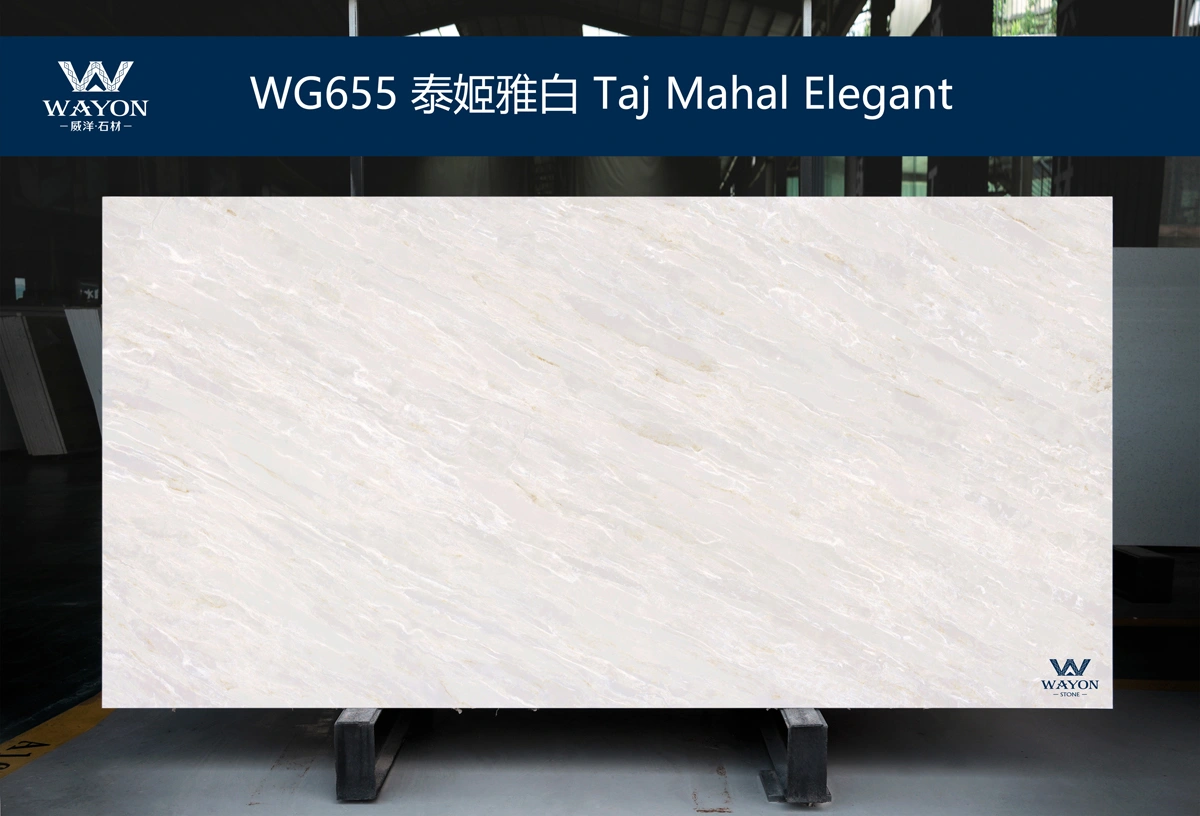
WAYON Quartz Stone WG655 Taj Mahal Elegant
These differences matter most when a project involves specific environmental demands. A slab designed for a sun-exposed exterior, for example, requires a different performance profile from one installed inside a climate-controlled kitchen. Understanding the composition provides the foundation for making that application-based decision.
Six Questions That Actually Decide Which Slab Is Better
Material selection becomes more practical when the comparison starts with the conditions a slab will encounter. Six questions can help project teams identify the more suitable option without relying on a single performance metric.
Will the Surface Be Exposed to High Heat?
Heat exposure is an important consideration for kitchen countertops, outdoor kitchens, fireplace surrounds, and certain commercial environments. Sintered stone offers excellent resistance to high temperatures, making it suitable for surfaces located close to heat sources.
Quartz performs well under normal indoor conditions and is widely used for kitchen worktops and vanities. Its resin content means prolonged exposure to intense heat requires greater care.
Will UV Exposure Be Part of the Project?
Direct sunlight can affect the long-term appearance and performance of some engineered surfaces. Exterior façades, terraces, outdoor kitchens, and hospitality areas require materials with strong resistance to prolonged UV exposure.
Sintered stone is well suited to these conditions because of its highly inorganic composition and strong UV resistance. Quartz is generally better suited to protected interior environments where continuous sunlight exposure is limited.
Is Fabrication Convenience a Priority?
Fabrication requirements can influence project costs, scheduling, and installation efficiency. Quartz is familiar to many stone fabricators and can accommodate common cutting, edging, drilling, and polishing processes.
Sintered stone can also be fabricated into complex finished components, but its hardness and material characteristics call for appropriate tools, techniques, and handling procedures. Projects involving tight production schedules should account for the fabricator's experience with the selected slab.
Is Design Consistency a Priority?
Large commercial projects often require consistent colors, patterns, and visual coordination across multiple spaces. Quartz provides extensive design possibilities, including controlled colors and engineered stone patterns that can support a consistent interior concept.
Sintered stone also offers sophisticated marble-inspired, stone-inspired, and contemporary designs, with large-format slabs supporting seamless visual compositions across walls, countertops, and other surfaces.
What Will the Slab Need to Withstand Every Day?
Daily use brings repeated contact with food, liquids, cleaning products, objects, and equipment. Both materials offer strong resistance to staining, scratching, and routine wear when properly selected and maintained.
For typical indoor applications, the practical difference may be less significant than fabrication quality, installation accuracy, edge treatment, and maintenance practices. These factors can have a substantial influence on long-term surface performance.
Is the Project Indoors, Outdoors, or Both?
The installation environment can bring the entire comparison into focus. Interior projects such as kitchens, bathrooms, offices, hotels, and retail spaces provide conditions where both materials can perform effectively.
Projects combining interior and exterior areas require closer attention to heat, sunlight, moisture, and temperature changes. Sintered stone offers broader environmental versatility in these situations.
Sintered Stone vs. Quartz by Application
Performance characteristics become more meaningful when evaluated against real project requirements. A material that performs exceptionally well outdoors may offer little additional value in a controlled interior environment. For this reason, application should be one of the primary factors in slab selection.
Kitchen Countertops
Both materials are suitable for kitchen countertops. Quartz works well in residential and commercial kitchens where design consistency, stain resistance, and fabrication convenience are important. Sintered stone becomes especially attractive for areas with greater heat exposure or a stronger connection to outdoor spaces.
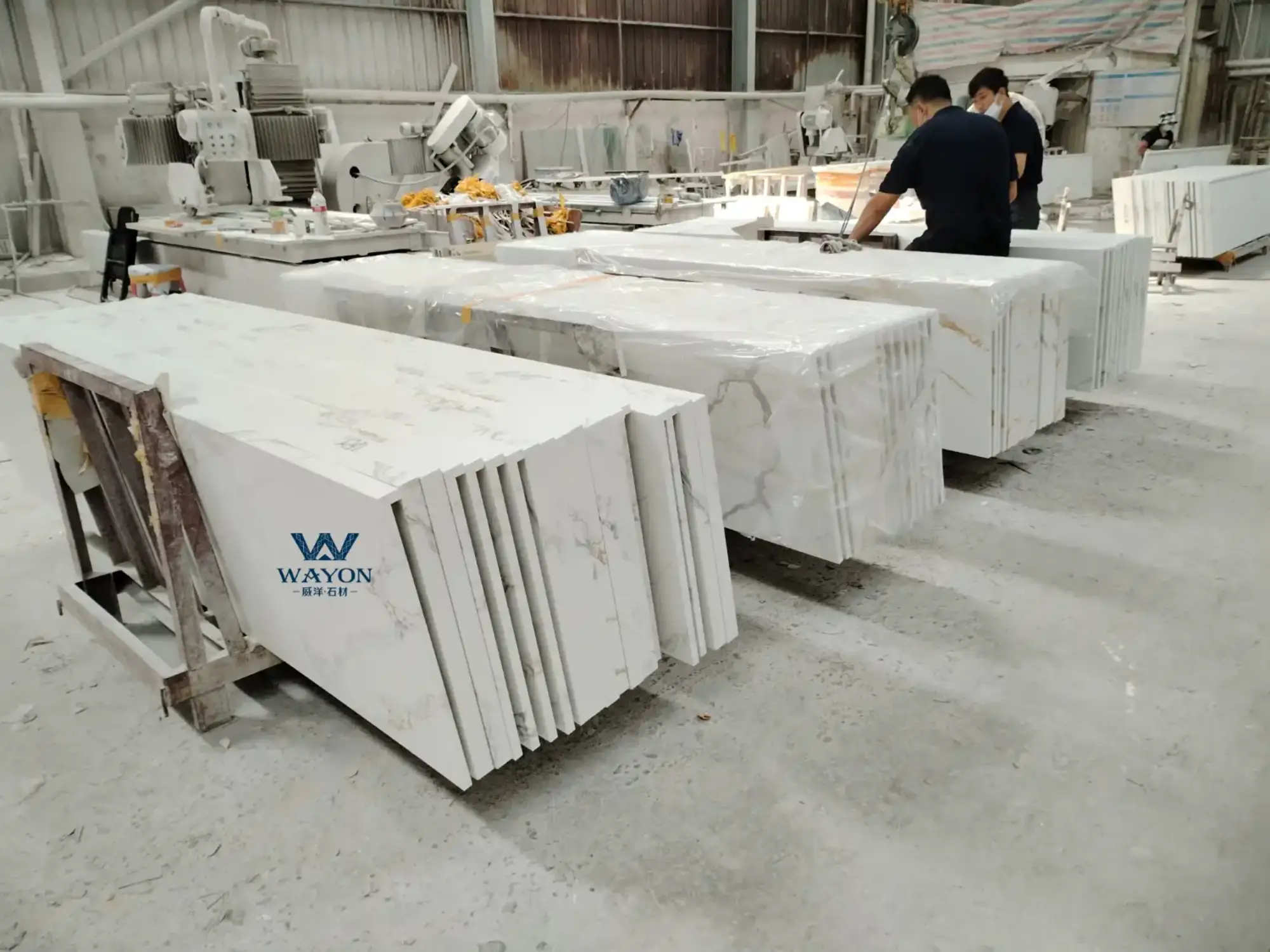
WAYON quartz stone finished countertops
Bathroom Vanities
Bathroom vanities typically face moisture, cosmetics, cleaning products, and frequent daily use. Both materials provide a durable and easy-to-maintain surface.
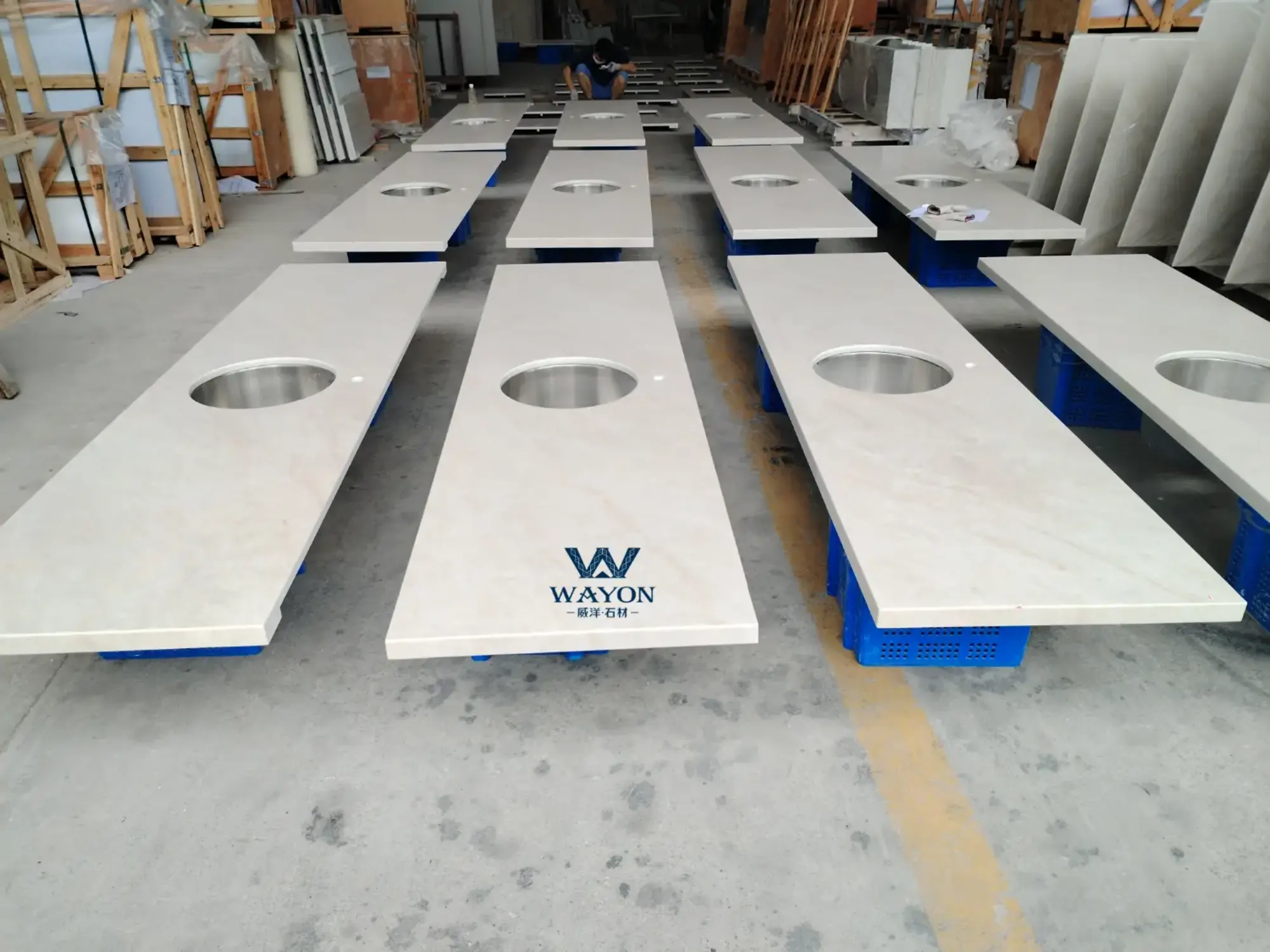
WAYON quartz stone for vanity top
Quartz is particularly well suited to interior bathroom projects where coordinated colors and patterns are part of the design concept.
Outdoor Kitchens and Terraces
Outdoor applications introduce direct sunlight, temperature fluctuations, moisture, and heat from cooking equipment. These conditions favor materials with strong environmental resistance.
Sintered stone is well suited to outdoor kitchens, terraces, poolside areas, and outdoor hospitality spaces.
Exterior Cladding
Exterior façades demand long-term resistance to UV exposure and changing weather conditions. Sintered stone provides the broader performance range needed for these environments while supporting large-format architectural designs.
Hotels, Restaurants, and Retail Interiors
Commercial interiors require a balance of appearance, durability, fabrication efficiency, and project consistency. Quartz can be an effective choice for guestrooms, reception areas, vanities, counters, and other controlled interior spaces. Sintered stone can add greater versatility where a project extends into exterior or high-heat areas.
For large developments, selecting both materials can provide a more efficient strategy. Quartz can serve interior spaces where design and fabrication are key priorities, while sintered stone can be allocated to exterior areas and locations exposed to greater environmental stress.
Which Is Better for Your Project?
The better slab depends on the conditions, priorities, and production requirements of the project. A simple decision framework can make the selection more efficient.
Choose Sintered Stone When
- The slab will receive prolonged direct sunlight
- Outdoor installation is required
- High temperatures are expected
- Exterior cladding or outdoor hospitality applications are involved
- Long-term environmental resistance is a major priority
One material needs to perform across both interior and exterior areas
Choose Quartz When
- The application is primarily indoors
- Design consistency is a major consideration
- A wide range of engineered colors and patterns is required
- Conventional stone fabrication is preferred
- Countertops, vanities, and other interior surfaces make up most of the project
Choose Both When
Large projects often contain spaces with very different performance requirements. A hotel, for example, may use quartz for guestroom vanities and interior counters while specifying sintered stone for outdoor terraces or exterior features.
This application-based approach allows each material to perform where its characteristics provide the greatest value. It can also help balance aesthetics, fabrication requirements, durability, and overall project efficiency.
Conclusion
Sintered stone and quartz each bring distinct advantages to architectural and interior projects. Sintered stone offers broader performance for high heat, UV exposure, and outdoor environments, while quartz remains an effective choice for many interior applications that prioritize design consistency and fabrication convenience.
The right selection starts with the project itself. Installation environment, expected exposure, design requirements, fabrication capabilities, and long-term use should all be considered before specifying a slab. For large projects, combining both materials can also create a more practical and performance-focused material strategy.
As a professional stone supplier, WAYON provides both sintered stone and quartz stone solutions for different architectural and interior applications. With a broad range of slab designs and project-oriented support, WAYON can help architects, designers, contractors, and stone fabricators identify suitable materials for specific project requirements and bring the selected surfaces from specification to finished application.
FAQ
1. What is the main difference between sintered stone and quartz stone?
The main difference lies in their composition and manufacturing processes. Sintered stone is produced from natural minerals under high pressure and temperature, while quartz is an engineered material made with quartz aggregates, resins, pigments, and other components. These differences influence their heat, UV, fabrication, and environmental performance.
2. Which slab handles high temperatures better?
Sintered stone has stronger resistance to high temperatures and is suitable for applications exposed to intense heat. It can be considered for areas around cooktops, fireplaces, and outdoor kitchens. Quartz performs well under normal indoor conditions, with greater care recommended around prolonged or intense heat sources.
3. Can quartz stone be used for outdoor applications?
Quartz is primarily suited to controlled interior environments. Prolonged exposure to direct sunlight and outdoor conditions can affect its suitability depending on the specific product formulation. For exterior cladding, outdoor kitchens, and other continuously exposed applications, sintered stone generally provides a broader performance range.
4. Which material offers more design flexibility?
Both materials provide extensive design possibilities. Quartz offers highly consistent colors and engineered patterns, making it attractive for coordinated interior schemes. Sintered stone provides large-format designs inspired by natural marble, stone, and other architectural surfaces, giving designers considerable flexibility across interior and exterior applications.
5. Which slab is easier for stone fabricators to process?
Quartz is familiar to many fabricators and supports widely used cutting, edging, drilling, and polishing processes. Sintered stone can also be processed into customized finished components, though its hardness and material characteristics require suitable equipment, tooling, and fabrication expertise.
6. Which material is more suitable for commercial projects?
The answer depends on the type of commercial space. Quartz can be highly effective for hotels, offices, retail interiors, restaurants, and other controlled environments. Sintered stone becomes particularly valuable for projects involving exterior areas, outdoor hospitality spaces, high heat, or significant environmental exposure.
7. Do sintered stone and quartz require different maintenance?
Both materials are designed for relatively straightforward routine care when properly installed and used. Cleaning requirements depend on the specific product and finish. Following the manufacturer's care recommendations helps preserve surface appearance and performance over the long term.
8. Can a project combine sintered stone and quartz slabs?
Yes. Combining the two materials can be an efficient solution for large or multi-environment projects. Quartz can be allocated to selected interior areas where design consistency and fabrication efficiency are priorities, while sintered stone can be used for exterior, outdoor, or high-heat applications. This approach allows each material to be specified according to actual project conditions.