

What Is Grey Terrazzo
Grey terrazzo is a composite decorative stone material made with a grey base and selected aggregates such as marble, quartz, granite, glass, or other mineral chips. Architects value it for its calm, neutral color and visible stone texture.
For designers and project buyers, grey terrazzo is more than a flooring choice. It can be used for floors, walls, countertops, vanity tops, stairs, reception desks, furniture, and prefabricated architectural components. The final appearance and performance depend on the binder system, aggregate size, surface finish, thickness, and installation environment.
What Is Grey Terrazzo
Grey terrazzo is a type of terrazzo stone that uses a grey cement, resin, or inorganic base to hold decorative aggregates together. After the material cures, the surface is ground and finished to reveal the chips within the grey background.
The grey stone may come from the binder itself, added mineral pigments, or a controlled mix of both. Light grey terrazzo can create a soft, minimal look, while dark grey terrazzo can feel stronger and more architectural.
Common aggregates include marble chips, quartz particles, granite, recycled glass, and selected stone fragments. Marble gives a classic, natural look; quartz can add hardness and sparkle; and glass can create a cleaner, more modern surface.
Grey terrazzo isn't a single product. One slab may use small white marble chips for a quiet look, while another may use large black, beige, or glass aggregates for a bold design effect. This is why you should contact your supplier, like WAYON STONE, for visual samples and technical details before specification.
Main Types of Grey Terrazzo
Cement-Based Grey Terrazzo
Cement-based grey terrazzo has a mineral appearance and a traditional terrazzo character. It is often used in public buildings, commercial lobbies, corridors, and large architectural floors where a natural material feeling is important.
This type can be highly durable, but it may require more attention to sealing, curing, and color consistency. Slight color variation may occur because cement-based materials are influenced by raw materials, moisture, production conditions, and finishing methods.
Epoxy Grey Terrazzo
Epoxy grey terrazzo uses a resin binder. It can support a wide color range and is often installed as a thinner system for interior floors and decorative surfaces. It is common in offices, retail spaces, hotels, schools, and healthcare buildings.
Its color control can be strong, and the surface can look refined. For outdoor applications, buyers should confirm UV resistance, climate suitability, and long-term performance before deciding.
Inorganic Grey Terrazzo
Inorganic grey terrazzo combines a mineral-based appearance with controlled factory production. Manufacturers can supply it as slabs, tiles, countertops, vanity tops, and prefabricated components, depending on their capabilities.
For B2B projects, inorganic terrazzo can be practical because it supports customization, fabrication, and more predictable delivery. WAYON STONE offers high-performance inorganic terrazzo for architectural stone projects where buyers need color development, aggregate selection, finished products, and batch management.
It is often chosen for large-scale projects that require a stable supply and prefabrication support.
Why Grey Terrazzo Is Popular in Architectural Design
Grey is one of the most flexible colors in architectural design. It works well with wood, metal, glass, concrete, marble, quartz, and many soft interior palettes. This makes grey terrazzo suitable for hotels, offices, apartments, shopping centers, public buildings, and residential interiors.
The grey background also helps the aggregates stand out without making the surface feel too busy. Small chips create a quiet, refined texture, while larger aggregates create a stronger decorative effect.
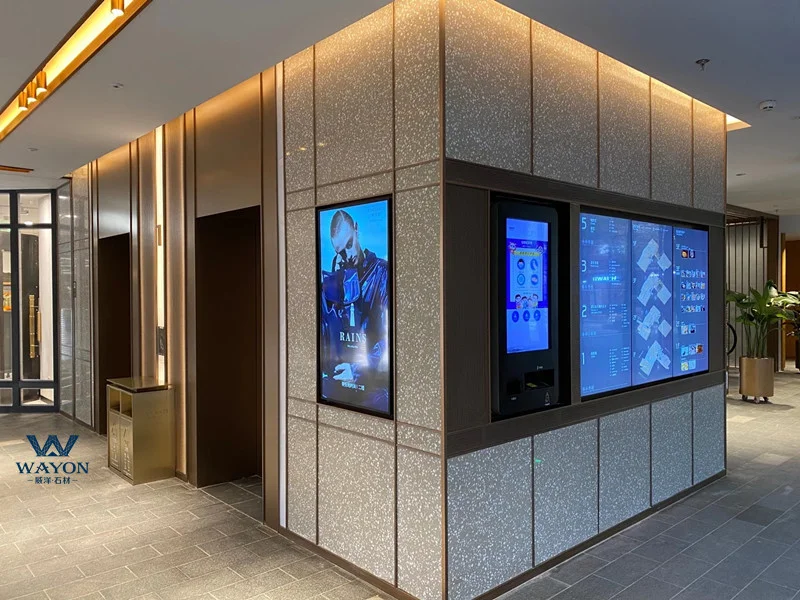
WAYON WT265 Sunday Grey Terrazzo Stone designed for the wall of Shanghai Xintiandi shopping mall
Compared with a plain grey surface, grey terrazzo has more depth and movement. It can support modern, industrial, minimalist, luxury, and hospitality design styles without relying on a loud color. This balance makes it useful for projects that need both visual identity and long-term design stability.
Common Applications of Grey Terrazzo
Flooring and Wall Surfaces
Grey terrazzo flooring is widely used in commercial lobbies, hotels, shopping centers, office buildings, public facilities, and residential spaces. For flooring, buyers should consider thickness, slip resistance, abrasion performance, joint layout, and cleaning requirements.
Grey terrazzo wall panels can create a continuous stone effect in reception areas, corridors, bathrooms, elevators, and feature walls. Wall applications may require thinner slabs, secure fixing systems, and careful panel layout.
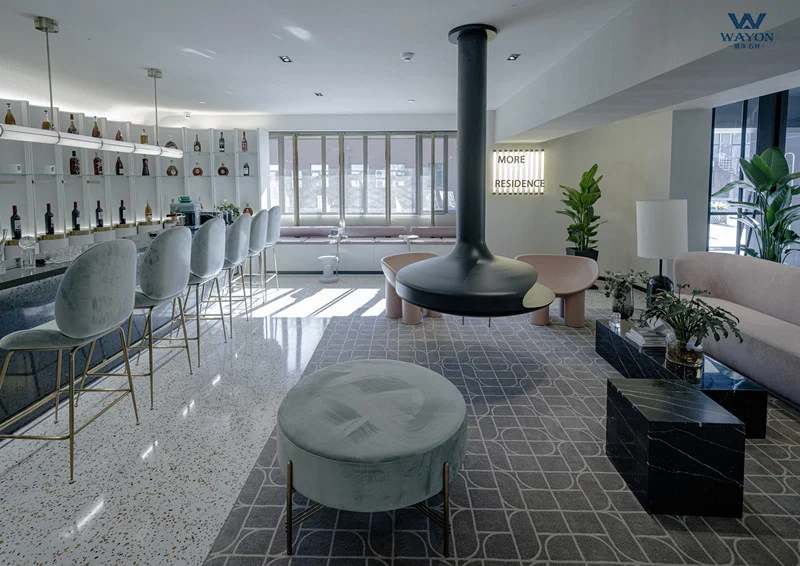
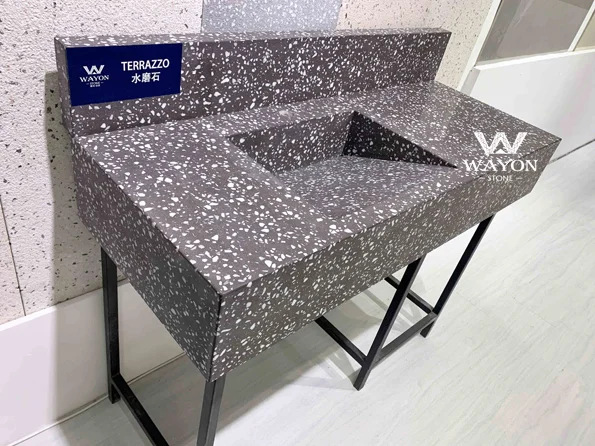
Countertops and Vanity Tops
Grey terrazzo countertops are used in kitchens, hotel bathrooms, commercial service counters, bars, and reception desks. In these applications, buyers should evaluate stain resistance, edge processing, sealing, joint design, and daily cleaning needs.
For vanity tops, water exposure, basin cutouts, edge details, and surface protection are especially important. A capable supplier should provide fabrication support, not just raw slabs.
Stairs, Furniture, and Prefabricated Components
Grey terrazzo tiles can also be used for stair treads, tabletops, benches, reception counters, wall modules, and custom architectural pieces. These applications often require accurate drawings, controlled dimensions, and coordinated installation planning.
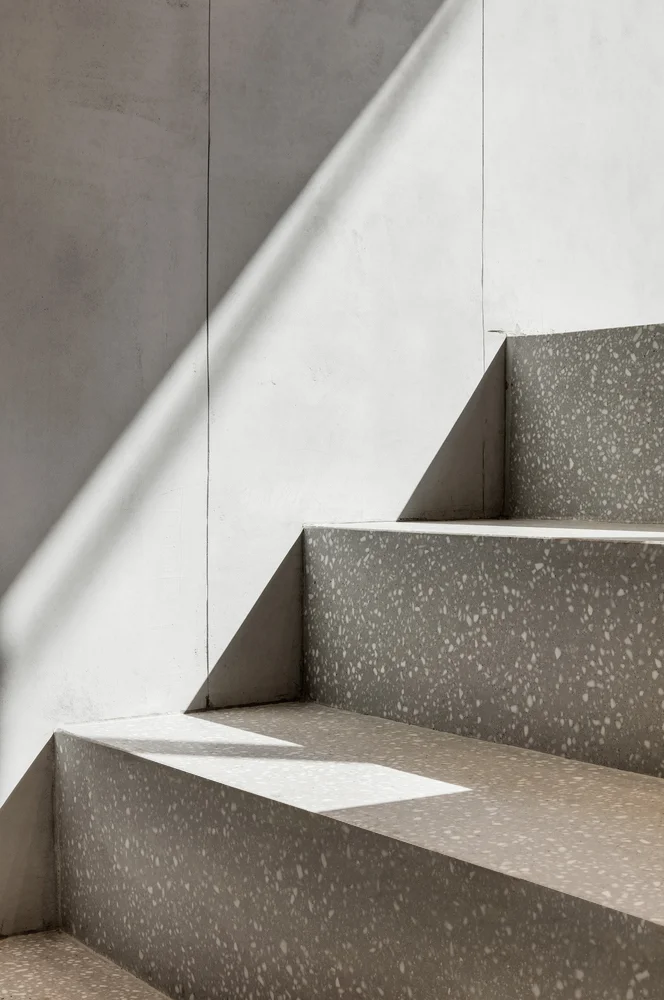
Prefabrication can reduce on-site cutting and improve project efficiency. For commercial and hospitality projects, buyers should confirm CAD support, packaging methods, spare quantity planning, and production batch control before ordering.
This multi-application capability makes grey terrazzo a practical solution for integrated architectural projects.
Pros & Cons of Grey Terrazzo
Grey terrazzo offers strong design flexibility. The base tone, aggregate color, chip size, density, surface finish, and product format can all be adjusted to suit the project style. It can be made into slabs, tiles, countertops, stairs, wall panels, and custom components.
It also performs well in many high-use spaces when the correct material system and finish are selected. For commercial floors and hospitality interiors, grey terrazzo can provide a long service life with proper installation and maintenance.
Still, buyers should understand its limitations, such as:
- Cement-based terrazzo products may show slight color variation.
- Some surfaces need sealing to improve stain resistance.
- Heavy slabs require careful transport, handling, and installation.
How to Choose Grey Terrazzo for a Project
First Step: Define the application area
Indoor flooring, outdoor paving, bathroom vanity tops, wall panels, stairs, and furniture pieces all require different performance standards.
Second Step: Confirm the design direction
Buyers should decide whether the project needs light gray, medium gray, charcoal gray, warm gray, or cool gray. Also review aggregate size and color, as they strongly affect the final appearance.
Third Step: Confirm the project details
Project teams should then confirm product format, dimensions, thickness, surface finish, edge profile, and installation method. A polished finish may suit walls and counters, while floors may require a finish that balances appearance with slip resistance.
Before procurement, professional buyers should request physical samples, technical information, fabrication details, packing standards, and batch-control methods. For large commercial stone solutions, it is also useful to confirm layout drawings, production schedules, replacement quantities, and delivery plans.
How to Clean Grey Terrazzo
Grey terrazzo is generally easy to maintain with the right cleaning method. Clean daily with a neutral cleaner and soft tools that won't damage the surface.
Clean up colored liquids, oil, and acidic substances quickly, especially on countertops, vanity tops, and food service areas. Avoid strong acid or strong alkaline cleaners because they may affect the surface finish or protective treatment.
Maintenance frequency depends on the terrazzo type, surface finish, traffic level, and application area. Buyers should follow the supplier’s care instructions rather than using a fixed schedule for all terrazzo materials.
Grey Terrazzo Solutions from WAYON STONE
WAYON STONE supplies architectural stone materials for commercial, hospitality, residential, and public projects worldwide. For grey terrazzo, Wayon can support customized color development, aggregate selection, slab production, tile supply, countertops, vanity tops, and prefabricated components.
Project support can include sample confirmation, CAD detailing, fabrication planning, packaging, and batch management. This is valuable for developers, contractors, distributors, and design teams that need stable supply across larger projects.
For reliable supply, working with an experienced manufacturer ensures better quality control, customization, and project coordination.
Frequently Asked Questions About Grey Terrazzo
Is grey terrazzo suitable for outdoor use?
Some grey terrazzo materials can be used outdoors, but suitability depends on the binder system, climate, surface finish, drainage, and slip resistance. Buyers should confirm outdoor performance with the supplier before using it for exterior paving or open-air areas.
Does grey terrazzo stain easily?
Stain resistance depends on the material type, porosity, surface finish, and sealing treatment. Properly protected terrazzo can perform well in many spaces, but oil, colored liquids, and acidic substances can stain it.
Can grey terrazzo be used for countertops?
Yes, grey terrazzo can be used for countertops, vanity tops, reception counters, and bar tops. The project team should confirm stain resistance, sealing, edge processing, sink cutouts, joints, and cleaning requirements before final selection.
What colors go well with grey terrazzo?
Grey terrazzo pairs well with white, black, wood tones, brushed metal, beige, muted green, and other low saturation colors. The best combination depends on the grey base tone and the aggregate color.
Is grey terrazzo available in custom sizes?
Yes, many manufacturers can supply grey terrazzo in slabs, tiles, countertops, and prefabricated shapes. Custom sizes depend on production limits, transportation conditions, installation requirements, and the supplier’s fabrication capability.
What is the difference between cement-based and epoxy grey terrazzo?
Cement-based grey terrazzo has a mineral appearance and a traditional terrazzo character. It is often used in public buildings and large architectural floors. Epoxy grey terrazzo uses a resin binder, can support a wider color range, and is often installed as a thinner system for interior floors and decorative surfaces such as offices, retail spaces, hotels, schools, and healthcare buildings.
Is grey terrazzo suitable for high-traffic commercial areas?
Yes. When you select the right material system and finish, grey terrazzo performs well in many high-use spaces. For commercial floors and hospitality interiors, it can provide a long service life with proper installation and maintenance.
Does grey terrazzo need to be sealed?
Some surfaces need sealing to improve stain resistance. The requirement depends on the terrazzo type, porosity, surface finish, and application area. Buyers should follow the supplier’s care instructions and sealing recommendations rather than applying one fixed approach to all materials.