

Flexible Stone vs Ceramic Tile: Which Is Better for Interior Walls?
Flexible Stone and Ceramic Tile can both create durable, visually appealing interior surfaces, but they address different project requirements. Ceramic Tile has a long-established position in residential and commercial interiors, supported by standardized installation methods and extensive design options. Flexible Stone introduces a lightweight and adaptable approach that is particularly relevant to feature walls, curved surfaces, and renovation projects.
This guide compares Flexible Stone and Ceramic Tile from a practical project perspective, helping architects, interior designers, contractors, and property developers identify which material fits a particular interior wall more effectively.
How Wall Conditions Change the Better Material
The shape and condition of an interior wall can have a direct impact on material selection. A material that performs efficiently on a large, flat surface may require additional planning when applied to curves, columns, or complex transitions. Evaluating the wall itself provides a more practical basis for choosing between Flexible Stone and Ceramic Tile.
Flat Walls
Flat walls offer a straightforward application for both materials. Ceramic Tile provides a familiar installation system with extensive options for tile size, layout, color, and pattern. It works particularly well when the design uses a defined grid or repeated geometric elements.
Flexible Stone is also well suited to large flat surfaces, especially when the design calls for a stone-like appearance with fewer visual interruptions. Its lightweight format can simplify material handling, while larger continuous areas can create a more unified visual effect.
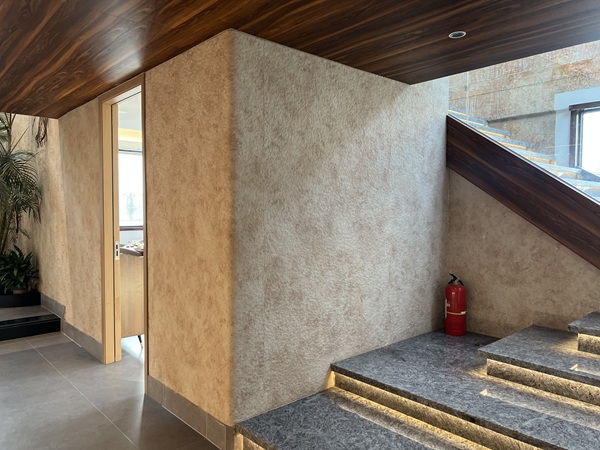
Curved and Irregular Walls
Wall geometry becomes a more important consideration when surfaces include curves, columns, arches, or other irregular forms. Rigid Ceramic Tile generally requires smaller formats, additional cutting, or more detailed installation work to follow complex shapes.
Flexible Stone can conform more readily to suitable curved surfaces, allowing architectural forms to remain visually continuous. This makes it particularly useful for reception features, curved partitions, columns, and sculptural interior elements where maintaining the original geometry is part of the design concept.
Corners and Surface Transitions
Corners and transitions deserve attention during material selection because they influence both appearance and installation detailing. Interior projects may include changes between flat and curved surfaces, wall-to-column connections, or transitions around architectural features.
Flexible Stone can provide a more continuous treatment across suitable transitions, supporting a cohesive stone effect. Ceramic Tile offers precise modular detailing, with grout lines and edge profiles becoming part of the finished design.
The most suitable material depends on whether the project prioritizes visual continuity or a structured tile layout. This distinction becomes especially relevant in feature walls where surface transitions are highly visible.
Installation and Total Project Cost
Installation can significantly influence the economics of a wall finish. Comparing only the purchase price of the material gives an incomplete picture because labor, handling, substrate preparation, and finishing requirements also contribute to the final project cost.
Ceramic Tile typically involves substrate preparation, layout, cutting, adhesive application, tile placement, grouting, and final cleaning. The process is well established, with experienced tile installers and standardized tools widely available.
Flexible Stone generally uses an adhesive-based installation approach. Preparation, measuring, cutting, adhesive application, placement, and edge or joint finishing remain important, while the lightweight format can make handling and positioning more convenient on suitable projects.
For this reason, the more useful comparison is total installed cost. Five factors deserve consideration: material price, transportation, handling, installation labor, and maintenance. A material with a higher unit price may still provide competitive project economics when it reduces handling requirements or installation time.
Renovation projects make this calculation particularly important. Short shutdown periods, limited access, existing wall conditions, and restricted material movement can all influence the value of a lightweight wall covering. Flexible Stone can become strategically attractive when these practical constraints are part of the project brief.
Durability and Moisture Performance
Long-term performance depends on where the wall finish will be installed and how the complete wall system is designed. Surface material, substrate preparation, adhesive selection, waterproofing, cleaning practices, and installation quality all contribute to durability.
Ceramic Tile has a strong track record in areas exposed to moisture. Glazed ceramic surfaces are commonly selected for bathrooms, kitchens, and other interior spaces where regular cleaning and water exposure are expected. Its established installation practices also make specifications and maintenance procedures relatively familiar to contractors.
Flexible Stone can provide durable performance on interior walls when the product is selected according to the environmental requirements of the project. Moisture resistance, surface treatment, adhesive compatibility, and installation specifications should be verified for applications such as bathrooms or areas with frequent water exposure.
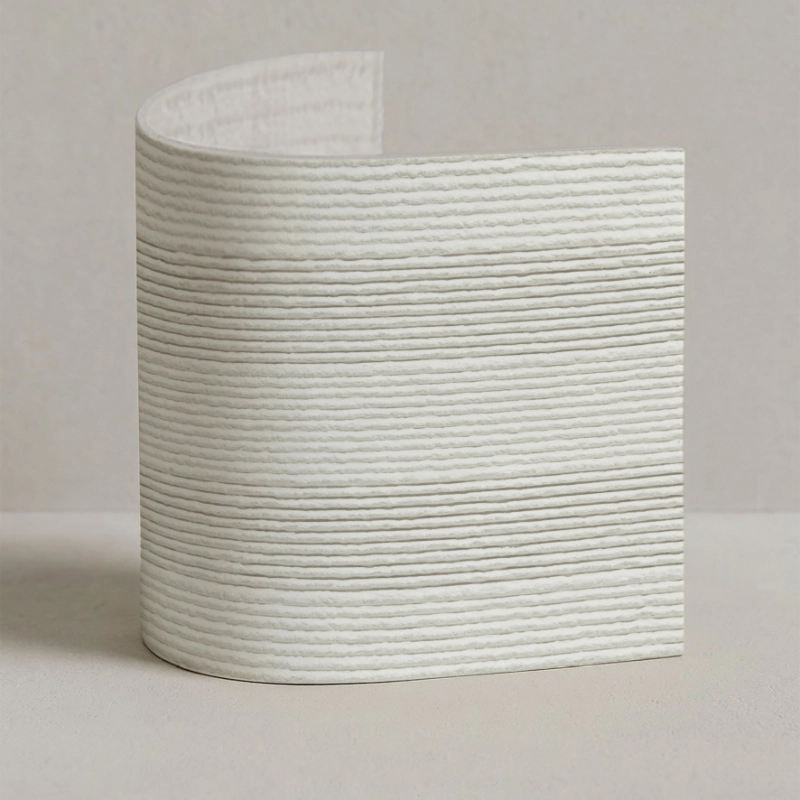
WAYON Flexible Stone MC513 Oman Vein
Maintenance also differs in practical ways. Ceramic Tile itself is generally easy to clean, while grout lines require periodic attention because they can collect dirt or show discoloration over time. Flexible Stone can offer a more continuous surface with fewer visible joints, which can simplify routine surface cleaning in suitable applications.
For conventional wet areas, Ceramic Tile remains a practical and established solution. On dry interior walls, the selection can place greater emphasis on geometry, design continuity, installation efficiency, and overall project requirements.
Which Material Fits Your Interior Project?
The best choice becomes easier to identify when the material is evaluated against the actual purpose of the space. Different interior environments place different demands on wall finishes, so a single material rarely represents the optimal solution for every application.
|
Interior Project |
Recommended Choice |
Main Reason |
|
Living room feature wall |
Flexible Stone |
Continuous stone appearance |
|
Curved feature wall |
Flexible Stone |
Adapts to complex geometry |
|
Hotel lobby |
Flexible Stone |
Design flexibility and easy handling |
|
Retail renovation |
Flexible Stone |
Efficient installation |
|
Office feature wall |
Flexible Stone |
Lightweight and contemporary finish |
|
Bathroom wall |
Ceramic Tile |
Established moisture performance |
|
Kitchen backsplash |
Ceramic Tile |
Easy cleaning and proven application |
|
Traditional patterned wall |
Ceramic Tile |
Wide range of modular formats |
Feature and Curved Walls
Feature walls often serve as visual focal points, making surface continuity an important design consideration. Flexible Stone is particularly suitable for projects involving curved forms, columns, arches, or large stone-inspired surfaces. The material can support a more fluid visual composition while accommodating architectural shapes.
Wet Areas
Bathrooms and kitchen areas require careful attention to water exposure and the complete installation system. Ceramic Tile offers a familiar solution with established practices for these environments. Flexible Stone can also be considered when the specific product provides appropriate performance for the intended application and the installation system meets project requirements.
Renovation Projects
Renovation introduces practical factors that are less significant in new construction. Material handling, access restrictions, installation time, and disruption to occupied spaces can influence the choice. Flexible Stone's lightweight format can make it a useful option for suitable renovation walls, particularly when a new decorative surface needs to be introduced efficiently.
This project-based approach provides a clearer decision path than evaluating either material solely on its general advantages. The wall condition, environment, design objective, and installation constraints should be considered together.
When Should You Choose Flexible Stone Over Ceramic Tile?
Flexible Stone becomes especially compelling when the project places greater value on adaptability, efficient installation, and continuous surface design. A simple decision test can help narrow the options before detailed product specifications and samples are evaluated.
1. Is the wall curved or geometrically complex?
If the design includes curved walls, columns, arches, or irregular surfaces, Flexible Stone can accommodate shapes that make rigid tile installation more involved.
2. Is installation time or material handling a major concern?
For renovation projects, hospitality interiors, and commercial spaces with restricted working periods, a lightweight wall covering can simplify handling and support a more efficient installation process.
3. Is a continuous stone appearance important?
Flexible Stone can create a more uninterrupted visual effect across larger surfaces, making it suitable for contemporary feature walls and architectural interiors.
4. Is the project a renovation?
Existing buildings often present access, scheduling, and logistical constraints. A lightweight material can be advantageous when minimizing disruption is part of the project requirements.
5. Does the wall design require a lightweight finish?
Weight can influence transportation, handling, structural considerations, and installation logistics. Flexible Stone provides an option for projects where reducing the wall finish's material load is valuable.
A project does not need to meet every condition. If two or more of these factors are important, Flexible Stone deserves closer evaluation alongside the project's technical requirements.
Conclusion
Flexible Stone and Ceramic Tile serve different priorities in interior wall design. Ceramic Tile remains a strong choice for conventional flat walls, moisture-prone environments, modular patterns, and projects that benefit from established installation systems.
Flexible Stone becomes more strategically valuable when curved geometry, lightweight construction, installation efficiency, renovation constraints, or a continuous stone appearance shape the project brief. The decision should ultimately consider the wall's physical conditions, the surrounding environment, installation requirements, and the intended design effect.
For architects, designers, contractors, and distributors evaluating flexible wall materials, WAYON provides Flexible Stone solutions designed for diverse architectural applications. Project-specific requirements can be matched with suitable textures, formats, and material specifications to support both design and practical performance.
FAQ
1. Is Flexible Stone cheaper than Ceramic Tile?
The material price varies by product, finish, size, and project volume. A more useful comparison considers the complete installed cost, including transportation, handling, labor, substrate preparation, and maintenance. Flexible Stone can offer cost advantages in projects where lightweight handling and efficient installation reduce associated expenses.
2. Can Flexible Stone be installed over existing ceramic tile?
It can be suitable for some renovation projects when the existing surface is stable, clean, dry, and properly prepared. The substrate condition and adhesive compatibility should be checked before installation. Manufacturer requirements should always guide the final application method.
3. Can Flexible Stone be used on curved interior walls?
Yes. Flexibility is one of its key applications. It can follow suitable curved surfaces, columns, arches, and other architectural forms, providing greater design freedom than conventional rigid tile.
4. Is Flexible Stone suitable for bathroom walls?
This depends on the specific Flexible Stone product and installation system. Water resistance, surface treatment, adhesive compatibility, and waterproofing requirements should all be evaluated before use in bathrooms or other moisture-prone areas.
5. Does Flexible Stone require grout?
Flexible Stone generally does not rely on a conventional grout system in the same way Ceramic Tile does. Joint and edge treatment depends on the product format and the desired visual effect, which can help create a more continuous wall appearance.
6. Which material is easier to maintain?
Both materials can be relatively easy to maintain when correctly installed. Ceramic Tile has the advantage of established cleaning practices, while Flexible Stone can provide fewer visible joints across suitable applications. Actual maintenance requirements depend on the surface finish, environment, and installation quality.
7. Is Flexible Stone suitable for commercial interior projects?
Yes. It can be considered for hotel lobbies, retail interiors, offices, restaurants, reception areas, and feature walls. Its lightweight format and adaptability can be particularly useful where design flexibility and installation efficiency are important.
8. How should I choose between Flexible Stone and Ceramic Tile?
Start with the wall itself. Consider its geometry, moisture exposure, desired appearance, installation conditions, maintenance requirements, and total project cost. Ceramic Tile is well suited to conventional walls and wet areas, while Flexible Stone offers strong advantages for curved surfaces, lightweight applications, renovations, and continuous stone-inspired designs.