

How to Make Money with Prefabricated Stone Products: A New Business Model for Stone Fabricators
As project sizes grow, fabricators begin to feel pressure from several directions at once. Local slabs carry high material and transport costs. Skilled labor becomes harder to retain and more expensive to schedule. Equipment purchases and workshop space absorb capital. Production calendars fill up quickly, and tight deadlines leave little room for unexpected delays.
The operating sequence becomes Measure and Re-measure, WAYON Fabrication, Receive, Deliver, and Install. In this arrangement the fabricator keeps the customer and the installation work local while outsourcing the production load. The shift is not simply a matter of purchasing finished pieces. It represents a move from a heavy-asset production model toward a more flexible project-acceptance model that still retains control of the highest-value local activities.
The Hidden Profit Problem in Traditional Stone Fabrication
Winning more projects is usually viewed as pure progress. In practice, each additional order also increases production pressure. The relationship between volume and profit is not always linear once the workshop reaches its practical limits.
Material Cost
Local slab purchasing involves more than the sticker price of the stone. Transportation, inventory holding, and material waste all add to the true cost of every project. When multiple large jobs run in parallel, these costs accumulate quickly and reduce the margin available on completed work.
Labor Cost
Every project still requires cutting, edge processing, polishing, drilling, and assembly. Higher project volume increases dependence on experienced fabricators. Overtime, recruitment, and training expenses rise in step with the order book, placing further pressure on overall profitability.
Capacity Becomes the Growth Ceiling
Workshop capacity can quietly become the limit of revenue. More orders often translate into more overtime, more labor, more equipment, and eventually more workshop space. Scale then becomes heavier rather than more profitable. The useful question is whether production capacity can be added without purchasing additional machines or expanding the physical plant.
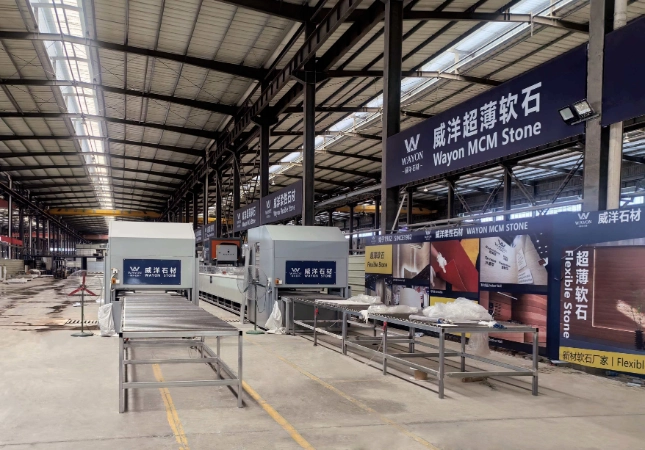
WAYON Flexible Stone Workshop
The New Model: Sell the Project, Outsource the Production
The traditional model places almost every production step inside the local workshop. The customer approaches the fabricator, material is purchased, fabrication takes place on site, and the finished pieces move to delivery and installation. The fabricator carries the full production burden for every order.
An extended factory model rearranges the sequence. The local team still acquires the customer, performs measurement and re-measurement, manages the project, handles local delivery, and completes the installation. WAYON takes responsibility for material sourcing, cutting, CNC processing, edge work, assembly, and prefabrication according to the approved drawings.
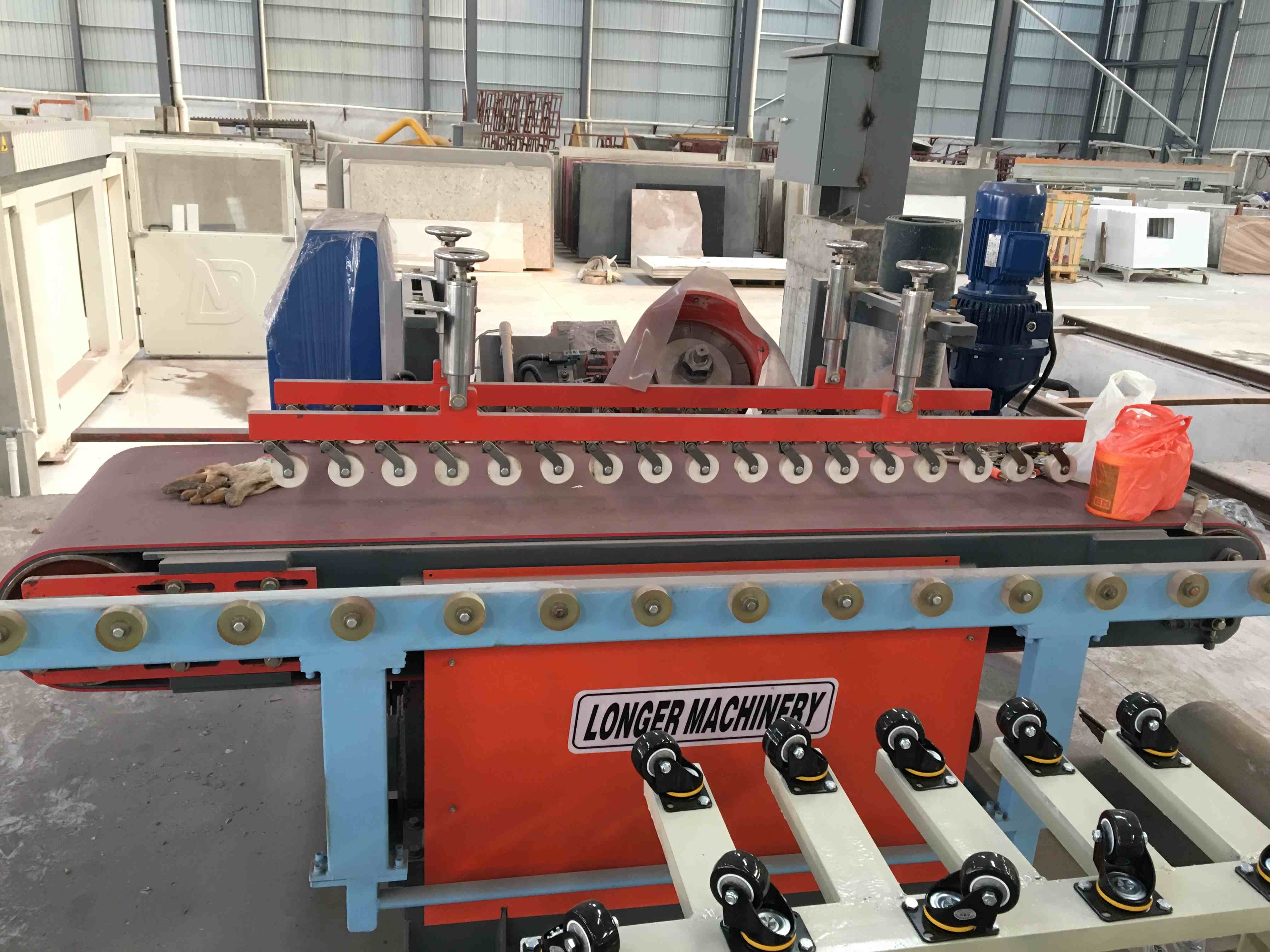
WAYON CNC Processing Machine
In this structure the fabricator is not outsourcing the business itself. The fabricator is outsourcing production capacity. Customer relationships, project coordination, and installation remain local assets. The manufacturing partner supplies additional throughput when the local workshop cannot absorb the full load.
Where the Extra Profit Comes From
Outsourcing does not automatically increase profit on every job. The advantage appears in the structure of costs and the ability to accept work that would otherwise be declined or delayed.
1. Reduce Fixed Production Pressure
Additional machinery, workshop expansion, and extra production workers become less urgent when a portion of fabrication moves upstream. Capital that would have been tied up in equipment can remain available for other uses.
2. Reduce Local Material Purchasing Pressure
Large volumes of expensive local slabs no longer need to be purchased and stored for every project. Production can be arranged according to the specific requirements of each job, lowering inventory risk and tied-up capital.
3. Turn Fixed Capacity into Flexible Capacity
The local workshop continues to handle the work it performs best. WAYON supplies additional production capacity when the schedule or the scale of a project exceeds local limits. Capacity becomes modular rather than fixed by the walls of a single building.
4. Take on Projects Beyond Current Capacity
A workshop that can comfortably manage three concurrent projects may be able to support five or six when external fabrication capacity is available. The exact number depends on project mix and logistics. The principle remains capacity expansion without physical expansion.
5. Earn from Project Management and Installation
The value proposition of the fabricator shifts. Instead of defining the business solely by the act of fabricating stone, the firm delivers the complete stone project. Measurement accuracy, coordination, delivery, and installation become the primary sources of local revenue and customer loyalty.
Which Stone Projects Are Best for Outsourced Prefabrication?
Not every job benefits equally from off-site prefabrication. Certain project characteristics amplify the advantages of the extended factory model.
Large Residential Projects
Luxury homes that include multiple kitchens and bathrooms often contain repeatable components in larger overall volumes. Prefabrication reduces the time the local shop must devote to repetitive cutting and finishing while still allowing the fabricator to control site measurement and final installation.
Hotel and Hospitality Projects
Hotels and similar properties typically feature many units with standardized stone components and strict construction schedules. Factory-scale prefabrication aligns well with the need for consistent quality across a large number of identical or near-identical pieces.
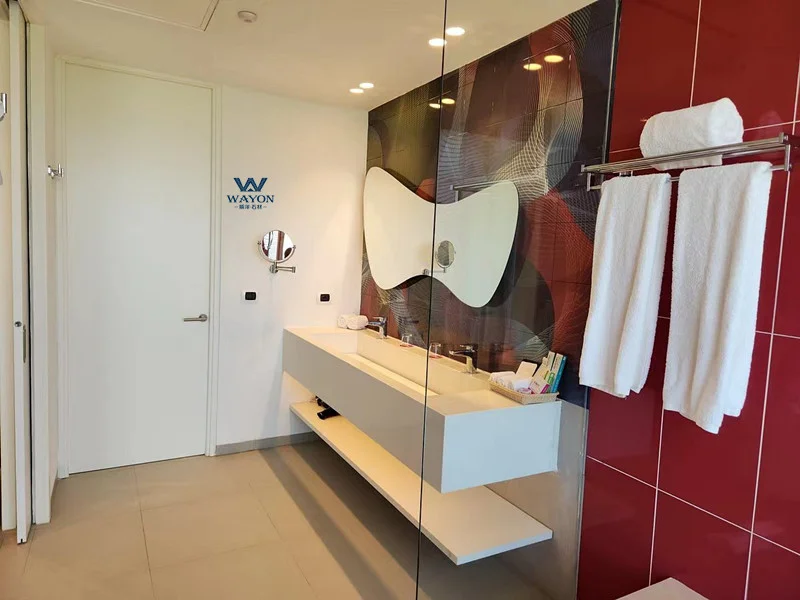
WAYON Quartz Stone products for Spain hotel
Commercial Developments
Office buildings, retail centers, apartment blocks, and mixed-use developments combine high volume with firm deadlines. These conditions favor a manufacturing partner that can deliver finished components on a predictable timetable.
Multi-Unit Projects
A single project may contain dozens or hundreds of similar stone components. The efficiency gains of prefabrication become more pronounced as the number of identical pieces increases.
Projects Beyond Workshop Capacity
The strongest opportunity often appears when the local workshop simply cannot handle the order economically. High volume, deadline pressure, and repeatable stone components form a clear decision filter. When all three factors are present, outsourcing production capacity becomes especially attractive.
The 5-Step Prefabricated Stone Workflow
A clear process keeps coordination simple and reduces the chance of dimensional errors.
Step 1: Measure. The local team conducts the initial site measurement.
Step 2: Re-measure. Dimensions, openings, edge details, and installation requirements are confirmed before any production begins.
Step 3: Send Drawings to WAYON. Approved drawings and project specifications are transmitted to the manufacturing partner.
Step 4: WAYON Fabricates and Prefabricates. Material preparation, cutting, CNC processing, edge work, assembly, and quality inspection take place at the factory.
Step 5: Receive, Deliver and Install. The local fabricator receives the finished components, transports them to the job site, and completes the installation.
Production work moves upstream while customer-facing and installation work stays local. This division of labor preserves the fabricator’s relationship with the client and the revenue associated with final delivery.
What You No Longer Need to Do Locally
Under the traditional project model the local operation must source expensive slabs, transport and store them, cut, polish, perform CNC work, process edges, assemble components, manage production workers, schedule workshop capacity, deliver the pieces, and install them. The list of tasks is long and capital-intensive.
In the prefabricated model the local responsibilities concentrate on Measure, Re-measure, Receive, Deliver, and Install. Fewer production resources are required for each project. The existing workshop can focus on the activities that create the greatest local value rather than attempting to perform every manufacturing step in-house.
Turn Your Workshop into an Extended Production Network
Traditional thinking treats factory capacity as the absolute ceiling of the business. The new model treats local operations plus external production capacity as the available project capacity. Local teams concentrate on sales, site measurement, customer communication, project coordination, delivery, and installation. WAYON concentrates on material sourcing, production, precision fabrication, prefabrication, and quality control.
The local facility becomes the hub of a larger production network. This framing positions the fabricator as the project owner and the manufacturing partner as an extension of production capability rather than a distant supplier of finished goods.
One Supplier, Multiple Stone Categories
Many fabricators currently maintain separate supplier relationships for quartz, marble, terrazzo, and other stone products. Working with a single manufacturer that supplies multiple categories simplifies procurement and expands the range of projects that can be pursued.
Broader material options allow the local firm to bid on different project types, meet varied designer specifications, expand project scope, and cross-sell complementary stone products. The commercial value lies not only in lower production pressure but also in the ability to pursue work that requires diverse materials without building every fabrication capability in-house.
How to Know If Your Business Is Ready for Prefabricated Stone
A simple business-fit test helps determine whether the model aligns with current conditions:
- Workshop capacity is frequently full
- Local labor costs are increasing
- Machinery investment is becoming expensive
- Large projects are difficult to schedule
- Local slabs are expensive
- The firm wants to take on larger projects
- Installation capability already exists
- Growth is desired without expanding the workshop
When customers and installation capability are already in place, production outsourcing becomes a practical method of adding capacity without rebuilding the entire business.
Why Partner with WAYON for Prefabricated Stone Production?
WAYON brings more than four decades of stone manufacturing experience, integrated processing capability across multiple stone categories, project-based fabrication, and the ability to produce custom work from drawings. Stable production capacity and established international supply experience support reliable delivery schedules.
The partnership functions as an extension of the local production operation. Local fabricators gain access to professional manufacturing capacity without investing in every piece of equipment themselves. Project drawings can be sent to WAYON for discussion of a tailored prefabricated stone production solution.
Conclusion
For local stone fabricators, growth does not always require a larger workshop. Through the sequence of Measure, Re-measure, WAYON Production, Receive, Deliver, and Install, a portion of the production load can be transferred to a specialist manufacturer while customer relationships, project management, and installation remain local.
The result is more production capacity, more projects, and more revenue. Fabricators ready to accept larger work without expanding their physical production infrastructure can contact WAYON to explore a custom prefabricated stone production arrangement.
FAQ
1. Can stone fabricators outsource stone production to China?
Custom production can be arranged from drawings, dimensions, and project specifications. The local team then receives the finished components, manages transport, and completes installation.
2. Does prefabrication mean I need to close my workshop?
No. Prefabrication works best as additional production capacity that supports the existing workshop rather than replacing it.
3. What types of stone projects are suitable for prefabrication?
Large residential, hospitality, commercial, and multi-unit projects benefit most, especially those that include repeatable components or face tight deadlines.
4. Can WAYON manufacture stone products from project drawings?
Yes. Custom fabrication based on project drawings is a core capability. Specific requirements can be discussed directly with the WAYON project team.
5. Can I use different types of stone for different projects?
WAYON supplies multiple stone categories, allowing fabricators to match material choices to the needs of each project without maintaining separate supplier networks for every product type.