

Prefabricated Stone Products vs Cut-to-Size Stone: What Is the Difference?
Stone can arrive at a project in many forms, and the difference between those forms can have a significant impact on fabrication, installation, labor, and project coordination. Cut-to-size stone and prefabricated stone products are both manufactured according to project requirements, but they represent different levels of completion before delivery.
Cut-to-size stone is primarily prepared to specified dimensions, with additional processing determined by the application. Prefabricated stone products take fabrication further, incorporating details such as finished edges, openings, assembled components, or other project-specific requirements. This distinction matters most in commercial and architectural projects where installation schedules, labor availability, dimensional accuracy, and coordination all influence project efficiency. Understanding how each supply model works makes it easier to determine where fabrication should take place and which approach best fits the project.
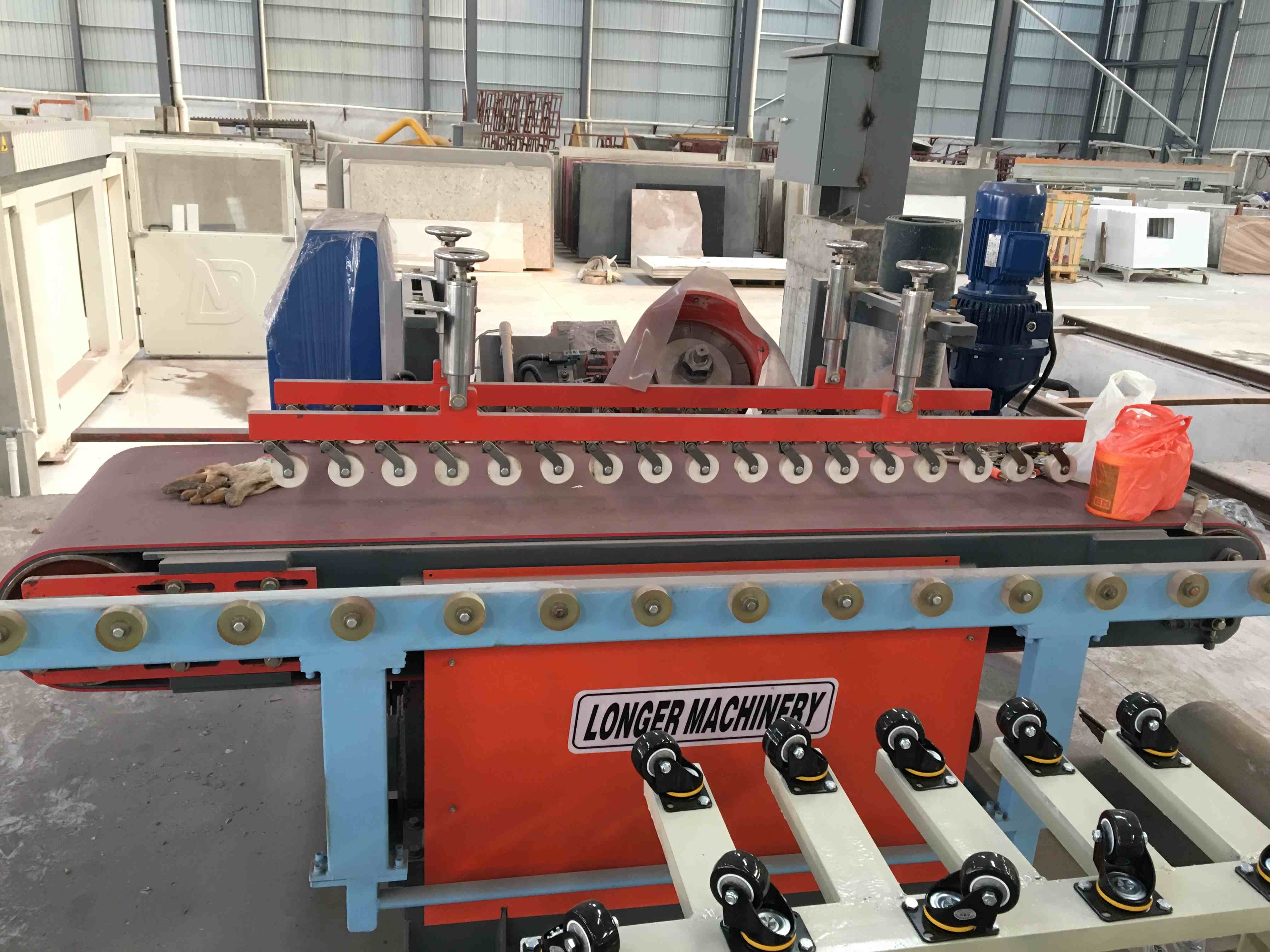
Precision CNC fabrication at WAYON Stone Processing Center
What Is the Difference Between Prefabricated Stone and Cut-to-Size Stone?
The distinction between these two supply models lies mainly in the scope of fabrication completed before the stone reaches the project site. Both can be produced to project-specific dimensions and specifications, while the degree of processing determines how the finished material is supplied and installed.
Cut-to-Size Stone
Cut-to-size stone is fabricated to match the dimensions required by a specific project. Processing commonly includes slab cutting, sizing, surface finishing, and selected edge treatments. Depending on the application, drilling, profiling, or additional adjustments may also be included in the factory scope.
The finished pieces are shipped according to the approved dimensions and specifications. Site teams may still handle fitting, minor adjustments, installation preparation, or additional fabrication. This model works well when dimensional flexibility remains important during installation.
Prefabricated Stone Products
Prefabricated stone products involve a broader fabrication scope. The stone is processed according to its intended application and can include finished edges, cutouts, drilled openings, shaped profiles, bonded sections, or assembled components.
The objective is to move more of the required fabrication into a controlled factory environment. Each component can be produced according to approved drawings and prepared for a more direct installation process on site.
The Key Distinction
The most useful distinction is the level of completion achieved before delivery. Cut-to-size stone primarily addresses the required dimensions of individual pieces, while prefabricated stone products cover a broader range of fabrication based on their final application.
A cut-to-size panel, countertop, or slab can receive additional processing after cutting, such as edge profiling, drilling, shaping, or assembly. When these processes are completed at the factory and the product is prepared around its intended installation requirements, it becomes part of a more comprehensive prefabrication approach.
This makes prefabrication a broader production concept. It can incorporate cut-to-size fabrication while extending beyond dimensional cutting to include finishing, component preparation, and assembly. The distinction is therefore best evaluated by looking at the scope of factory work and the final condition of the product at delivery.
How Much Work Is Completed Before Delivery?
The level of factory completion directly affects how a stone product is handled after it arrives on site. With cut-to-size stone, factory production focuses primarily on achieving the specified dimensions, surface finish, and selected edge treatments. Depending on the project, drilling or profiling can also be completed. Some fitting, adjustment, or additional fabrication may remain for the installation team.
Prefabricated stone products typically receive a broader range of factory processing. Finished edges, openings, profiles, bonded sections, or assembled components can be completed according to approved project drawings. Quality checks and product identification can also take place before shipment.
This difference affects the division of work between the factory and the jobsite. Cut-to-size stone offers greater flexibility for site-level adjustments, while prefabricated products shift more fabrication into the factory and arrive closer to their intended installation condition.
For project planning, the key consideration is how much fabrication should be completed before delivery and how much work the site team is prepared to handle.
Cost, Labor and Project Risk Tell a Different Story
The price of the stone itself does not always reflect the overall cost of a project. Fabrication scope, local labor, installation requirements, material waste, handling, and potential rework can all influence the final budget.
Cut-to-size stone may involve a narrower factory processing scope, which can make the initial quotation more straightforward. More work can remain with the local installation team, including fitting and site adjustments. This approach can be practical when skilled labor and fabrication facilities are readily available.
Prefabricated stone products generally involve more factory processing and coordination before shipment. The additional fabrication adds value to the delivered product while reducing the amount of work required on site. For projects with repeated components or demanding installation schedules, this can improve labor efficiency and reduce site-related rework.
The two models also distribute project risk differently. Cut-to-size stone leaves more flexibility for adjustments during installation. Prefabrication requires dimensions, drawings, and fabrication details to be confirmed earlier, placing greater emphasis on upfront coordination.
A useful procurement principle is to evaluate total project cost instead of factory price alone. The most economical option depends on the balance between factory fabrication, local labor, installation time, waste, and project complexity.
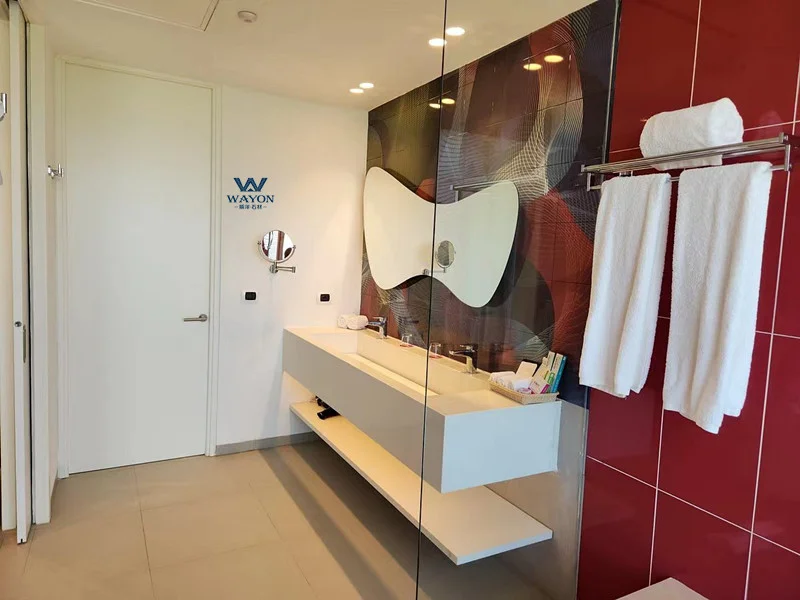
Completed commercial project application using WAYON fabricated stone components
Which Projects Are Better Suited to Each Option?
The right stone supply model depends largely on the complexity of the components, installation conditions, and degree of project standardization.
Prefabricated Stone Products
Prefabricated products are particularly suitable for projects with repeated components or detailed fabrication requirements. Hotel bathrooms, vanity tops, reception counters, stone furniture, and commercial interior components are common examples. These applications often benefit from consistent dimensions, finished details, and a more installation-ready product.
Prefabrication is also valuable when installation schedules are tight or on-site fabrication resources are limited. Moving more production into the factory can simplify site coordination and support consistent results across multiple components.
Cut-to-Size Stone
Cut-to-size stone is a practical choice for large wall areas, flooring, standard panels, and applications where site conditions may require adjustments. It can also work well when local fabrication teams have the equipment and expertise needed to complete final fitting and processing.
Projects with evolving dimensions or a strong need for installation flexibility may benefit from keeping part of the fabrication process closer to the jobsite.
The decision ultimately depends on the balance between fabrication complexity, repetition, site flexibility, and installation requirements.
Can a Project Use Both Prefabricated and Cut-to-Size Stone?
A commercial stone project does not have to rely on a single supply model. Combining prefabricated and cut-to-size stone can often create a more practical balance between installation efficiency and site flexibility.
For example, a hotel project may use prefabricated vanity tops and reception counters where repeated dimensions and finished details are important. Large lobby floors or wall areas can be supplied as cut-to-size pieces, allowing the installation team greater flexibility when working with actual site conditions.
This approach is particularly useful for projects with different fabrication requirements across various areas. Components that involve complex details, repeated production, or substantial factory processing can be prefabricated, while larger and simpler stone surfaces can remain in a cut-to-size format.
A hybrid supply strategy also allows procurement teams to allocate fabrication resources more efficiently. Instead of treating the project as a choice between two fixed options, each stone application can be evaluated according to its fabrication scope, installation conditions, and required level of completion.
How to Choose the Right Stone Supply Model
The choice between prefabricated and cut-to-size stone should reflect the specific conditions of each project. The amount of fabrication that can be handled on site is an important starting point. Projects with limited labor, equipment, or installation space can benefit from a higher level of factory completion.
Project readiness also plays a key role. Prefabricated products require accurate dimensions and approved drawings earlier in the production process, while cut-to-size stone generally provides more flexibility for site-level adjustments.
The degree of repetition is another useful consideration. Repeated components such as vanities, counters, and stone furniture can gain efficiency from standardized factory production. Projects with strong local fabrication capabilities may find cut-to-size stone more practical for larger or simpler applications.
The final decision should balance project readiness, fabrication complexity, local resources, and installation efficiency. A hybrid approach can provide the greatest flexibility when different areas of the same project have distinct fabrication requirements.
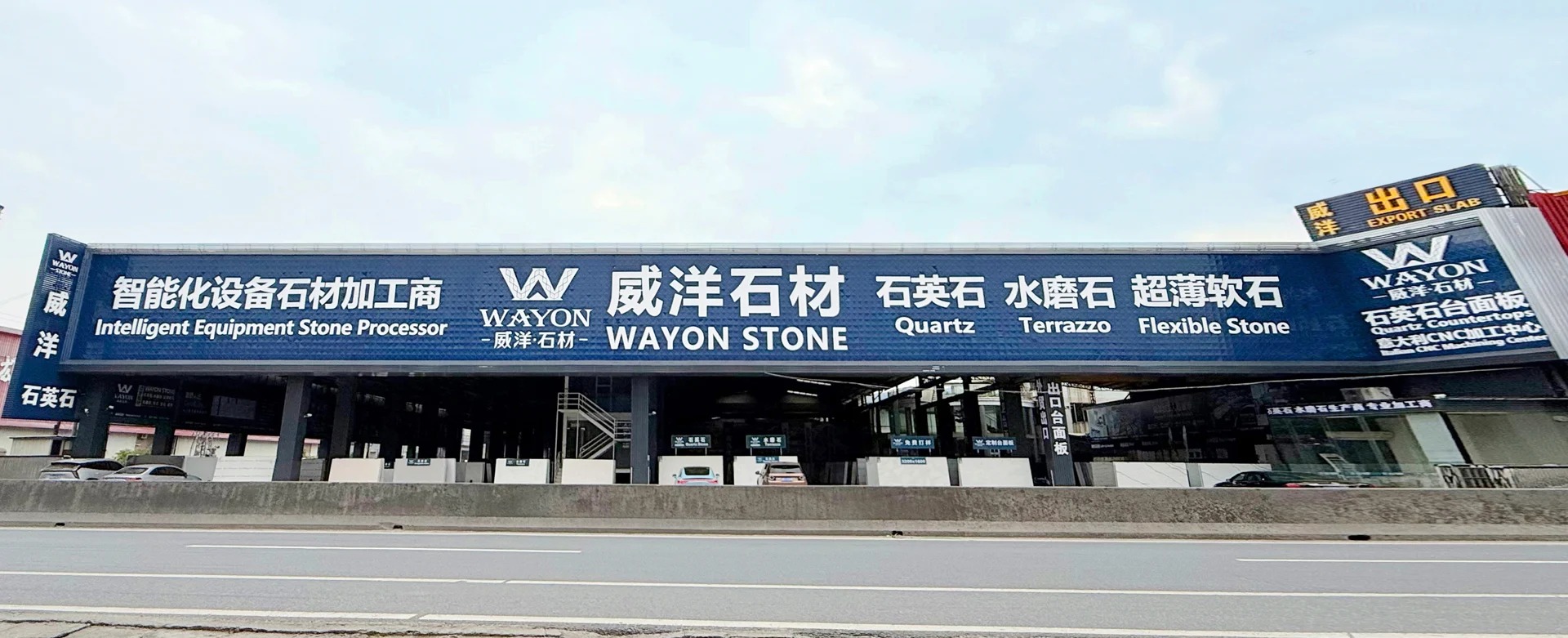
WAYON Stone production and processing base – supporting both cut-to-size and fully prefabricated stone supply models under
one manufacturing partner.
WAYON's Approach to Cut-to-Size and Prefabricated Stone Supply
WAYON supports different levels of stone fabrication according to project drawings, application requirements, and delivery expectations. This allows stone buyers to source either dimension-specific materials or more complete components from the same manufacturing partner.
For cut-to-size projects, production can cover project-specific cutting, surface finishing, edge processing, and other required fabrication. This approach suits applications where dimensions and basic finishing are the primary requirements.
For prefabricated stone projects, the manufacturing scope can extend to detailed component processing, openings, profiles, assembly, quality inspection, labeling, and project-specific packing. Finished components can be organized according to installation requirements to support efficient handling after delivery.
This production flexibility is particularly valuable for commercial projects involving multiple stone applications. Instead of applying one supply model across the entire project, fabrication can be matched to the requirements of each component.
For projects with approved drawings and defined specifications, WAYON can evaluate the required fabrication scope and recommend a suitable supply model. Send your project drawings and requirements to discuss the appropriate stone solution.
FAQ
Is cut-to-size stone considered prefabricated stone?
Cut-to-size stone can form part of a prefabricated product, but dimensional cutting alone does not define a fully prefabricated component. Prefabrication generally involves additional processing based on the product's final application.
Is prefabricated stone more expensive than cut-to-size stone?
Prefabricated stone usually includes a broader fabrication scope, which can increase the factory price. The overall project cost also depends on local labor, installation time, waste, handling, and potential rework.
Which option requires more detailed drawings?
Prefabricated stone generally requires more detailed and finalized drawings because a larger portion of the production work is completed before delivery. Cut-to-size projects can accommodate more site-level adjustments depending on the application.
Which stone supply method reduces on-site labor?
Prefabricated stone can reduce on-site fabrication and fitting work because more processing is completed before delivery. The actual labor savings depend on the product design, installation method, and project conditions.
Can cut-to-size and prefabricated stone be used in the same project?
Yes. A hybrid approach can be effective when different areas require different levels of fabrication. Complex or repetitive components can be prefabricated, while larger surfaces can remain in a cut-to-size format.
What information should be provided to a stone manufacturer for a quotation?
Useful information includes project drawings, dimensions, material specifications, surface finish, edge details, quantities, required fabrication, delivery location, and installation requirements. More complete information allows the manufacturer to assess the appropriate fabrication scope and provide a more accurate quotation.