

Quartz vs Granite: Which Stone Is Better for Your Project?
Choosing between quartz and granite is not only a matter of appearance. For architects, contractors, designers, and procurement teams, the better material depends on where the stone will be installed, how often the surface will be used, what maintenance conditions apply, and what visual effect the project needs to create.
Both materials are widely used in countertops, vanities, reception desks, hotel interiors, commercial spaces, and custom furniture. Granite brings the character of natural stone, while quartz stone offers more controlled performance and design consistency. This guide compares quartz and granite from a commercial project perspective, helping project teams make a practical material decision before specification, fabrication, and installation.
Quick Answer: Quartz vs Granite
Quartz is usually preferred for commercial projects requiring low maintenance, consistent design, and stain resistance. Granite is often chosen when natural stone appearance, heat resistance, and unique patterns are more important.
What Are Quartz and Granite?
Quartz and granite are both durable stone surfaces, but they come from different material systems. Quartz is engineered, while granite is natural, which affects appearance, maintenance, and application planning.
What Is Quartz Stone?
Quartz stone is an engineered surface made from quartz minerals, resin binders, pigments, and selected additives. It is widely used in countertops, vanities, reception desks, laboratory surfaces, and commercial worktops because of its consistent appearance, stain resistance, and low maintenance characteristics.
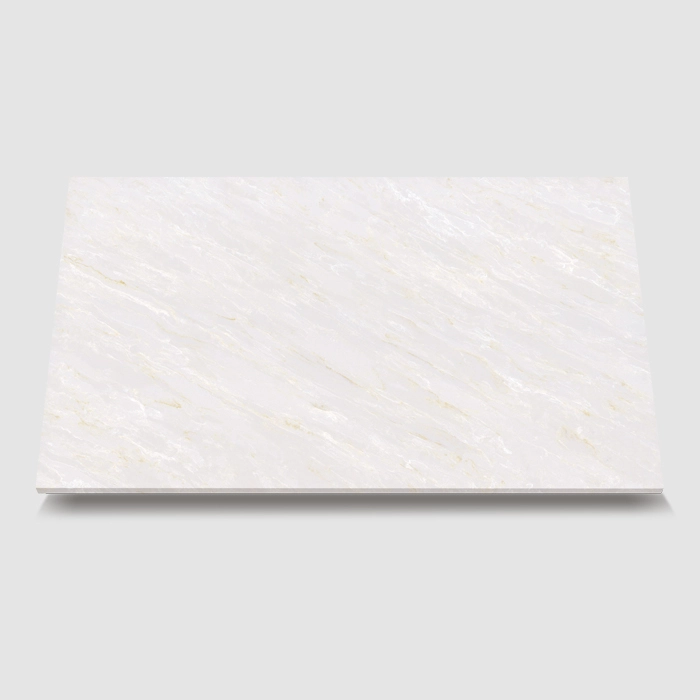
WAYON WG655 Taj Mahal Elegant Quartz Stone sample
Manufacturers such as Wayon provide quartz stone solutions for commercial projects, including customized colors, slab specifications, and project-based support.
What Is Granite?
Granite is a natural igneous stone formed by minerals such as quartz, feldspar, and mica. It is quarried from natural deposits, cut into slabs, and used for countertops, floors, wall cladding, and architectural features. Granite is valued for its natural variation, hardness, and heat resistance.
Quartz vs Granite at a Glance
|
Comparison Factor |
Quartz Stone |
Granite |
|
Material type |
Engineered stone |
Natural stone |
|
Appearance |
More controlled and consistent |
Naturally unique and variable |
|
Scratch resistance |
Strong |
Strong |
|
Stain resistance |
Generally stronger due to low porosity |
Depends on stone type and sealing |
|
Heat resistance |
Good, but avoid direct extreme heat |
Generally stronger against heat |
|
Maintenance |
Low maintenance, usually no sealing |
Usually requires sealing |
|
Design control |
Easier to match project direction |
Depends on natural slab selection |
|
Typical applications |
Countertops, vanities, desks, laboratories |
Countertops, floors, walls, feature areas |
This comparison gives a quick selection direction. Final decisions should still be based on physical samples, technical data, finish, installation conditions, and the way each surface will be used after project handover.
Key Differences Between Quartz and Granite
Material Composition and Surface Structure
The most important difference is material origin. Quartz stone is an engineered stone made through a controlled manufacturing process. Its structure combines quartz minerals with resin and pigments, creating a dense, stable surface for interior applications.
Granite is a natural stone. Its performance and appearance depend on the mineral structure formed in nature, which means every slab can show different color movement, grain distribution, and veining. This natural variation is one of granite’s strengths, but it also requires closer slab selection during project planning.
For commercial projects, this difference affects more than visual preference. Quartz usually gives project teams stronger control over color direction, surface consistency, and maintenance expectations. Granite offers natural stone character, but the final result depends heavily on the selected slab, finish, and installation conditions.
Appearance and Design Control
Quartz stone is often selected for modern commercial interiors that require a clean, consistent, and planned design effect. It can be produced in solid colors, fine particle patterns, crystal effects, subtle stone textures, or marble inspired veining. This makes it useful for hotels, offices, laboratories, retail counters, apartment projects, and hospitality interiors.
Granite has a more natural and varied appearance. Its colors and patterns are created by mineral formation, so each slab has its own visual identity. This makes granite attractive for projects that want a stronger natural stone feeling, especially in luxury lobbies, feature counters, wall cladding, and selected flooring areas.
Designers should consider how each material responds to lighting. Gloss, color depth, mineral particles, and vein movement can appear different under daylight, warm lighting, or strong commercial illumination. For important projects, small samples should be reviewed together with full slab images or actual slabs.
Durability, Scratch Resistance, and Daily Wear
Quartz and granite are both durable materials, but their performance should be understood by application. Quartz stone has strong hardness and a dense surface, making it suitable for areas exposed to daily contact, cleaning, movable objects, and frequent use. This includes kitchen countertops, vanity tops, service counters, reception desks, and work surfaces.
Granite also offers strong hardness and long term durability. It has been used for countertops, flooring, stairs, exterior elements, and architectural features for many years. Since granite is natural, performance may vary depending on the stone type, mineral structure, finish, and surface treatment.
For high use commercial interiors, quartz often provides more predictable surface behavior. Granite can perform very well, but project teams should confirm the specific stone variety and technical requirements instead of assuming all granite slabs behave the same way.
Stain Resistance and Maintenance
Quartz stone usually has an advantage in stain resistance because of its dense, low porosity surface. It does not normally require regular sealing, which makes daily maintenance easier for hotels, apartments, offices, restaurants, and public facilities. Spills from coffee, wine, oil, cosmetics, and food should still be cleaned promptly.
Granite is a natural stone and many varieties require sealing to reduce water absorption and staining. If sealing is not maintained properly, some granite surfaces may become more vulnerable to oil, colored liquids, and cleaning residues. Maintenance planning is therefore part of the material decision.
For commercial projects, this difference matters after handover. A surface that looks attractive during installation must also be manageable for facility teams, hotel staff, tenants, or building operators. Quartz is often preferred when low maintenance is a major requirement.
Heat Resistance and Practical Use Limits
Granite generally performs better under heat exposure. Because it is natural stone, it can usually tolerate higher temperatures than quartz. This is one reason granite remains attractive for some kitchen, food service, and heat exposed areas.
Quartz stone contains resin, so direct contact with extremely hot cookware, pans, or equipment should be avoided. In kitchens, cafes, restaurants, and food service counters, heat resistant pads and clear operating procedures are recommended. This does not prevent quartz from being used in these spaces, but it does require proper use.
The practical choice depends on the actual environment. If the surface mainly faces stains, cleaning, guest use, and daily contact, quartz may be more suitable. If the area involves frequent high heat exposure and the project accepts natural stone maintenance, granite can be a strong option.
Cost and Long Term Project Value
There is no fixed rule that quartz is always more expensive than granite, or granite is always more expensive than quartz. Cost depends on color, origin, slab size, thickness, finish, fabrication complexity, edge details, cutouts, quantity, packaging, and transportation.
For B2B projects, the more useful question is long term value. Quartz may reduce maintenance pressure because it normally does not require regular sealing and offers stable stain resistance. Granite may provide strong value in projects where natural stone character, premium appearance, and heat resistance are important.
A project should compare initial purchase cost, fabrication cost, installation complexity, maintenance responsibility, and expected service conditions. This creates a more accurate material decision than comparing slab price alone.
Which Material Works Better for Different Applications?
Application should guide the final material choice. Quartz is often stronger for high use indoor surfaces, while granite works well where natural stone character or heat resistance matters.
Kitchen and Commercial Food Service Countertops
Quartz stone is generally a strong choice for residential kitchens, apartment projects, hotel pantry areas, and commercial food service counters where stain resistance and easy cleaning are important. Its dense surface helps reduce daily maintenance pressure in spaces that deal with food, drinks, oil, and frequent cleaning.

Granite can also be used for kitchen and food service countertops, especially where natural stone character or higher heat resistance is required. Project teams should still consider sealing, stain protection, edge details, and cleaning procedures before final approval.
Hotel Vanities and Bathroom Surfaces
Quartz stone is well suited to hotel vanity tops and bathroom counters. These areas often face cosmetics, soap, water, cleaning agents, luggage contact, and daily guest use. A low maintenance surface can help hotel operators manage long term appearance more easily.
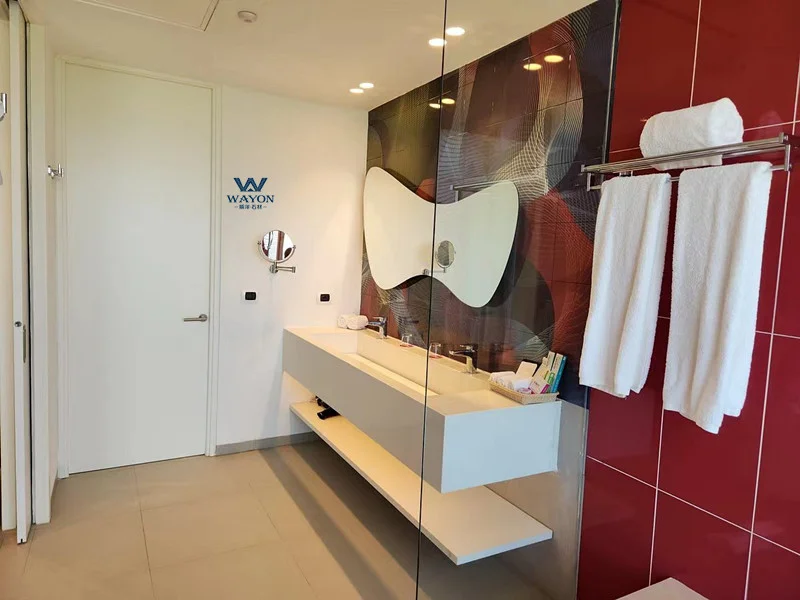
Granite can be used in high end bathrooms, suite vanities, and decorative stone features. Its natural texture can create a luxury atmosphere, but waterproofing details, sealing maintenance, and cleaning methods should be reviewed carefully.
Reception Desks and Service Counters
Quartz stone is a practical option for reception desks, office counters, service counters, and commercial front desks. These surfaces are touched frequently and may come into contact with bags, documents, drinks, electronic devices, and cleaning products.
Granite can be used when the design concept calls for a natural stone statement. It works especially well for feature counters or luxury interiors where unique slab movement is part of the visual identity. The project team should accept that granite patterns will vary from slab to slab.
Interior Walls, Lobbies, and Feature Areas
Granite has clear value in lobby walls, background walls, columns, feature panels, and public areas where natural stone expression is important. Its mineral texture and natural pattern can add depth and a premium feeling to commercial interiors.
Quartz stone can also be used in interior feature areas, especially when the surface needs both decorative value and practical performance. It may be selected for display platforms, counter surrounds, wall features, ledges, and modern hospitality interiors that require a cleaner design language.
Commercial Flooring and Public Areas
Granite is commonly used in flooring and public areas, but specification should not be based on appearance alone. Architects and contractors need to evaluate slip resistance, abrasion resistance, thickness, surface finish, substrate conditions, joint layout, and cleaning methods.
Quartz stone should only be considered for flooring when the specific product and technical data support that application. For many projects, quartz is more commonly used on horizontal work surfaces, while granite is more familiar in flooring and heavy architectural areas.
Laboratories, Healthcare, and Education Projects
Quartz stone is generally more suitable for laboratories, healthcare counters, nurse stations, school worktops, and other surfaces that require frequent cleaning and dependable daily performance. Specific disinfectants, chemicals, and cleaning agents should still be checked against technical information.
Granite is not usually the first choice for these functional surfaces unless the project specifically requires natural stone. In healthcare and education environments, maintenance control, stain resistance, and cleaning routines often make quartz the more practical material.
How Architects, Contractors, and Designers Choose Between Quartz and Granite
Architects should begin with performance requirements. The specification should define where the material will be installed, which thickness and finish are required, what technical standards apply, and whether the surface needs stain resistance, slip resistance, fire related data, hygiene performance, or food contact suitability.
Contractors need to review fabrication and installation details. Slab dimensions, cutouts, edge profiles, joint positions, support structure, access routes, site protection, and installation sequence can all affect the final result. Granite may require more attention to slab selection because of natural variation, while quartz should be fabricated according to manufacturer guidance.
Interior designers should evaluate the visual effect at both sample scale and project scale. Quartz is helpful when the design requires controlled color and modern consistency. Granite is stronger when the design calls for unique natural movement and a more traditional stone character.
Before confirming the material, the project team should answer these questions.
- Where will the material be installed?
- How often will the surface be used or cleaned?
- Will the surface contact heat, oil, wine, cosmetics, or chemicals?
- Does the project require low maintenance after handover?
- Should the design look controlled or naturally varied?
- What fabrication, budget, and delivery conditions apply?
Why Samples, Finish, and Technical Data Matter
Website images are useful for early selection, but they cannot fully show color depth, surface texture, gloss, mineral particles, or pattern scale. This is especially important for granite, because natural slabs can vary significantly.
Quartz samples help project teams confirm color, finish, and surface character, but larger slab images are still useful for understanding pattern movement. Granite should be reviewed through actual slab photos or selected slabs whenever possible, especially for large surfaces, feature areas, or book matched designs.
Before final specification, project teams should request physical samples, slab images, thickness options, finish information, fabrication guidance, maintenance instructions, and relevant technical reports. Useful data may include hardness, water absorption, stain resistance, chemical resistance, abrasion performance, slip resistance, and heat exposure guidance.
Wayon can support quartz stone selection with samples, product information, fabrication guidance, and project based recommendations. Providing drawings, application areas, preferred colors, thickness requirements, estimated quantity, destination, and performance expectations helps the supplier offer more accurate support.
Quartz or Granite: Final Recommendation
Quartz stone is generally the better option for high use indoor surfaces that require stain resistance, low maintenance, and controlled design. It is especially suitable for countertops, vanity tops, reception desks, service counters, laboratory surfaces, and commercial worktops.
Granite remains valuable when a project requires natural stone character, strong heat resistance, and unique slab variation. It can work well for feature counters, lobbies, flooring, wall cladding, and luxury decorative areas where natural variation is part of the design intention.
The strongest material decision is not based on choosing one stone for every area. Architects and designers should match each material to the function of the space, the maintenance plan, the design goal, and the long term operation of the project. For quartz stone recommendations, Wayon can support project teams with samples, technical information, and fabrication based guidance.
Frequently Asked Questions
Is quartz better than granite?
Quartz is better for projects that need low maintenance, stain resistance, and consistent design control. Granite is better when the project values natural stone character, stronger heat resistance, and unique slab variation. The better choice depends on the application.
Which is more durable, quartz or granite?
Both quartz and granite are durable materials. Quartz performs well on frequently used indoor surfaces because of its dense structure and stain resistance. Granite is also hard and durable, but its performance depends on the specific stone type, finish, sealing, and use conditions.
Does quartz need sealing like granite?
Quartz stone usually does not need regular sealing. Granite often requires sealing because it is a natural stone and may absorb liquids depending on its mineral structure and finish. For commercial projects, sealing requirements should be included in the maintenance plan.
Which is better for commercial countertops?
Quartz is often preferred for commercial countertops because it is easy to clean, stain resistant, and suitable for high frequency use. Granite may be selected for countertops where natural stone appearance or higher heat resistance is more important.
Is granite more expensive than quartz?
There is no universal answer. Price depends on stone variety, color, origin, thickness, finish, slab size, fabrication complexity, quantity, packaging, and transportation. Project teams should compare both initial cost and long term maintenance cost.
Can quartz and granite be used outdoors?
Granite is more commonly used in exterior stone applications, but the specific stone type, finish, installation method, and weather exposure should still be confirmed. Quartz should not be specified outdoors unless the manufacturer confirms that the product is suitable for exterior use.
Which material is easier to maintain?
Quartz is generally easier to maintain because it has a dense surface and usually does not require sealing. Granite can also last for many years, but it needs proper sealing, suitable cleaning products, and regular care to reduce stain risk.
What information is needed for a project quotation?
Provide drawings, application areas, preferred colors, finish, thickness, dimensions, edge details, cutouts, estimated quantity, project location, technical requirements, delivery destination, and expected schedule. This helps the supplier recommend suitable materials and prepare a more accurate quotation.
Is quartz better than granite for commercial projects?
For most commercial projects that prioritize low maintenance, stain resistance, and design consistency, quartz is the stronger choice. A reliable quartz stone manufacturer or quartz supplier can deliver consistent slabs that meet project schedules and performance expectations. Granite remains preferable when natural variation and higher heat resistance are essential design requirements.
Which is better for hotel countertops, quartz or granite?
Quartz is generally better for hotel countertops and vanities because of its stain resistance, easy cleaning, and consistent appearance under daily guest use. Working with an experienced quartz slab manufacturer helps ensure accurate fabrication, edge details, and color matching across multiple rooms or floors. Granite can still be selected for feature counters where unique natural patterns support the luxury design concept.
What should buyers consider when sourcing quartz or granite?
Buyers should evaluate application requirements, maintenance plans, design goals, technical data, slab consistency, fabrication capability, delivery schedules, and supplier experience. Partnering with a proven quartz stone manufacturer or quartz supplier such as Wayon provides access to samples, project support, and reliable production capacity. For granite, careful slab selection and sealing plans are equally important to protect long-term performance.