

Ultimate Guide to Zero Silica Quartz
The engineered stone industry is undergoing its most significant transformation in decades. At the center of this shift is zero-silica quartz — a new category of quartz surface that eliminates crystalline silica from its composition while preserving the performance that made engineered quartz the dominant countertop material worldwide. This guide covers everything a commercial buyer needs to know: what zero-silica quartz is, why it matters, how it compares to other options, where regulations are headed, and how to source it reliably.
What Is Zero Silica Quartz?
Zero-silica quartz is an engineered stone surface made from natural quartz crystals bound with an alternative resin system that eliminates or dramatically reduces crystalline silica content. Traditional engineered quartz uses a polyester resin binder, leaving the slab with up to 90 percent crystalline silica by weight. Zero silica quartz replaces this with a proprietary, eco-friendly binder formulation that achieves the same mechanical performance without the silica hazard.
How It Is Made
The manufacturing process for zero silica quartz follows the same general stages as traditional quartz — raw material selection, mixing, vacuum vibro-compression, curing, and surface finishing — but with a critical difference in the binder system.
Instead of relying on a resin that leaves a high residual silica content, zero-silica quartz uses a specially formulated binder that encapsulates the quartz particles, preventing respirable silica dust during fabrication. The result is a slab that meets or exceeds the mechanical specifications of traditional quartz — Mohs hardness 7, flexural strength above 45 MPa, water absorption below 0.02 percent — while reducing crystalline silica content to levels that comply with the strictest global regulations.
Key Performance Parameters
|
Parameter |
Specification |
|
Material |
Engineered quartz stone (zero-silica formulation) |
|
Available Patterns |
27 patterns, polished surface (customizable) |
|
Standard Size |
3000×1400mm (118"×55") |
|
Jumbo Size |
3200×1600mm (126"×63") |
|
Thickness |
18mm, 20mm, 30mm |
|
Mohs Hardness |
7 |
|
Water Absorption |
< 0.02% |
|
Flexural Strength |
≥ 45 MPa |
|
Fire Classification |
A2 |
|
Antibacterial |
Yes |
|
Certifications |
ISO 9001, CE, NSF, Greenguard, Greenguard Gold |
Key Benefits of Zero Silica Quartz
Health and Safety
The most benefit of zero silica quartz is the elimination of respirable crystalline silica dust during fabrication. When traditional quartz slabs are cut, ground, or polished, the crystalline silica in the material is released as fine dust particles that can be inhaled by fabricators. Prolonged exposure causes silicosis — a progressive, irreversible, and potentially fatal lung disease.
Zero silica quartz eliminates this risk at the source. Fabricators can cut and polish the material without generating hazardous silica dust, thereby reducing the need for expensive dust-extraction systems, wet-cutting protocols, and personal protective equipment. For fabrication shops, this means lower compliance costs, reduced liability, and a safer work environment.
Regulatory Compliance
Regulations governing crystalline silica exposure are tightening across all major markets. Zero silica quartz is designed to meet the most stringent of these requirements:
- Australia: Proposed ban on engineered stone containing more than 1 percent crystalline silica. Zero silica quartz complies comfortably.
- United States: OSHA permissible exposure limit of 50 µg/m³ over 8 hours. Zero silica quartz eliminates the exposure risk entirely.
- European Union: Revised silica limits under the Carcinogens and Mutagens Directive. Zero silica quartz future-proofs compliance.
- Singapore: Increasingly strict green building standards that favor low-emission materials.
For distributors and importers, carrying zero silica quartz means access to markets that are effectively closed to traditional high-silica products.
Eco-Friendly and Sustainable
Zero silica quartz aligns with the growing global demand for sustainable building materials. The eco-friendly binder system reduces the environmental footprint of the manufacturing process, and the material itself contributes to green building certifications including LEED and WELL.
Greenguard Gold certification — which WAYON STONE's zero silica quartz carries — verifies that the product meets stringent chemical emissions limits, making it suitable for use in schools, healthcare facilities, and other sensitive environments.
Outstanding Physical Performance
Eliminating silica does not mean compromising on performance. Zero silica quartz maintains:
- Mohs hardness 7 — Resistant to scratches from knives and everyday use
- A2 fire classification — Non-combustible, suitable for commercial applications
- Antibacterial properties — Inhibits bacterial growth on the surface
- Non-porous surface — Resists staining from wine, coffee, oil, and acidic foods
- No sealing required — Zero maintenance over the lifetime of the installation
Design Versatility
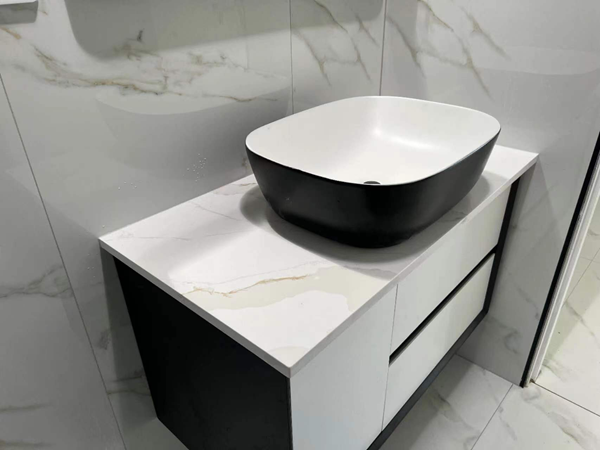
Zero silica quartz is available in 27 patterns with a polished surface finish, primarily in white and light color families that are the most popular choices in residential and commercial applications. Custom colors and finishes can be developed for large-scale projects with sufficient order volume.
Zero Silica vs Low Silica vs Traditional Quartz
Understanding the differences between these three categories is essential for making informed sourcing decisions.
|
Parameter |
Traditional Quartz |
Low Silica Quartz |
Zero Silica Quartz |
|
Crystalline Silica Content |
Up to 90% |
1% to 40% |
< 1% (effectively zero) |
|
Binder System |
Standard polyester resin |
Modified resin |
Eco-friendly alternative binder |
|
Mohs Hardness |
7 |
7 |
7 |
|
Fabrication Safety |
Requires dust control |
Reduced dust risk |
No silica dust hazard |
|
Australian Market Access |
Banned (proposed) |
Conditional |
Full access |
|
OSHA Compliance |
Requires controls |
Easier compliance |
Full compliance |
|
Color Range |
Broad |
Broad |
27 patterns (expanding) |
|
Certifications |
Varies |
Varies |
ISO, CE, NSF, Greenguard Gold |
How to Choose
For the Australian market: Zero silica quartz is the only viable option. The proposed 1 percent silica limit effectively bans traditional and most low-silica products.
For the US market: Low silica quartz may be sufficient for current OSHA compliance, but zero silica quartz provides full protection against future regulatory tightening and eliminates liability concerns for fabricators.
For the European market: Zero silica quartz future-proofs compliance as the EU revises its silica directives.
For price-sensitive markets without silica regulations: Traditional quartz remains an option, but the trend toward stricter regulation is global. Investing in zero silica quartz now avoids the need to switch suppliers later.
Global Regulatory Landscape
Understanding the regulatory environment is critical for buyers who source quartz for international markets. Regulations vary significantly by region, and the trend is uniformly toward tighter controls.
Australia
Australia has proposed the strictest regulation globally: a ban on engineered stone containing more than 1 percent crystalline silica. This follows a landmark study by the Australian National University that linked engineered stone fabrication to an epidemic of silicosis among Australian stonemasons. The ban has broad political support and is expected to take effect in the near term.
Impact on buyers: Any distributor supplying the Australian market must source zero silica quartz. Traditional high-silica products will be effectively banned. Low-silica products (above 1 percent) will also be excluded.
United States
OSHA's current permissible exposure limit for respirable crystalline silica is 50 µg/m³ averaged over an 8-hour workday. This applies to all workplaces, including fabrication shops. Several states — including California under Cal/OSHA — have implemented additional requirements.
The Occupational Safety and Health Administration has signaled that it may further reduce the exposure limit in response to new evidence on silicosis risks. Fabrication shops are increasingly refusing to fabricate high-silica quartz to avoid liability, creating supply chain pressure for low-silica and zero-silica alternatives.
Impact on buyers: While traditional quartz remains legal in the US, the liability landscape is shifting. Distributors who offer zero silica quartz provide their fabricator customers with a safer product and reduce their own legal exposure.
European Union
The EU is revising its Carcinogens and Mutagens Directive to include stricter limits on exposure to crystalline silica. Germany and France have already implemented national limits that are more stringent than the current EU standard. The revised directive is expected to align with or exceed OSHA's current limits.
Impact on buyers: European distributors should prepare for tighter regulations by transitioning to low-silica or zero-silica products. Early adopters will have a competitive advantage when regulations take effect.
Singapore and Southeast Asia
Singapore's Building and Construction Authority has been promoting green building standards that favor low-emission materials. While there is no specific silica ban in place, the trend toward stricter material regulations is clear. Singaporean buyers are increasingly specifying Greenguard Gold-certified products, which contain no silica quartz.
Recommended Applications
Zero silica quartz is suitable for the same range of applications as traditional quartz — with the added advantage of being safe to fabricate and compliant with strict regulations.
Residential Applications
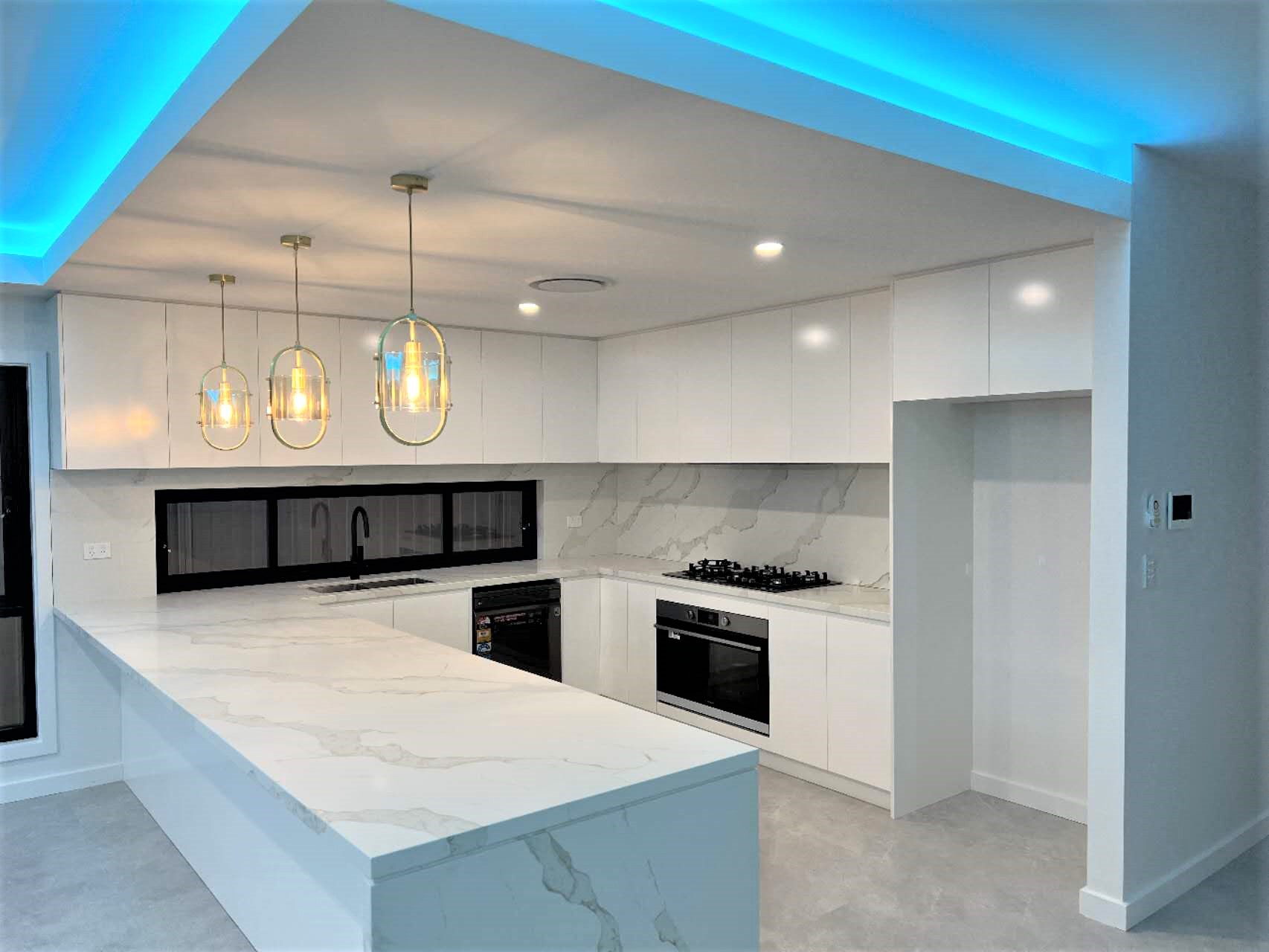
Kitchen countertops and islands. The primary application for quartz. Zero silica quartz delivers the same stain resistance, scratch resistance, and zero-maintenance performance as traditional quartz, with the added benefit of safe fabrication.
Bathroom vanities and shower surrounds. Non-porous surface handles moisture and cleaning products without degradation. No sealing required.
Residential worktops. For bulk orders serving large-scale residential developments, zero silica quartz provides consistent color and performance across thousands of units.
Commercial and Hospitality
Hotel lobbies and reception desks. High-traffic commercial spaces benefit from quartz's scratch and stain resistance. Zero silica quartz adds the advantage of compliance with green building certifications that many hotel chains now require.
Restaurant tabletops and bar tops. NSF-certified for food contact safety. Non-porous surface resists stains from food and beverages. Easy to clean and sanitize.
Retail display surfaces. Design versatility allows custom colors and finishes that align with brand identity.
Healthcare and Laboratories
Hospital countertops and nurse stations. Antibacterial properties and non-porous surface inhibit bacterial growth. Easy to sanitize. Greenguard Gold certification ensures low chemical emissions — critical for healthcare environments.
Laboratory work surfaces. Chemical resistance and easy cleaning make zero silica quartz suitable for laboratory applications where hygiene and durability are priorities.
Pharmacy and medical dispensing areas. NSF-certified for food and drug contact safety.
Why Choose WAYON STONE for Zero Silica Quartz
WAYON STONE operates a 130,000-square-meter precision processing center equipped with 12 automated bridge-cutting machines and Italian five-axis CNC equipment. This manufacturing infrastructure enables consistent quality across large production runs — critical for distributors and large-scale projects where batch consistency is non-negotiable.
Industry-Leading Certification
WAYON STONE's zero silica quartz carries ISO 9001, CE, NSF, Greenguard, and Greenguard Gold certifications — all verified through regular third-party audits. For buyers supplying regulated markets, this certification package eliminates the need for additional testing or documentation.
Proven Track Record with International Clients
WAYON STONE is an approved supplier to multiple internationally recognized real estate groups. This track record matters for distributors and contractors who need to demonstrate supply chain reliability to their own clients.
Full OEM and Customization Capability
For wholesale partners, WAYON STONE offers full-process OEM customization — from custom slab dimensions and thicknesses to private labeling and packaging. This flexibility allows distributors to build their own brand presence without investing in manufacturing infrastructure.
Competitive Value
WAYON STONE's vertically integrated production — from raw material sourcing to finished slab — delivers industry-leading cost performance. For distributors, this means competitive pricing without compromising on quality, certification, or compliance.
Buying Guide for Wholesalers and Importers
Sourcing zero silica quartz requires more due diligence than buying traditional quartz. Here is a practical checklist for commercial buyers.
Step 1: Verify the Zero Silica Claim
Not all products labeled "low silica" or "silica free" meet the same standard. Request:
- Independent laboratory test reports showing crystalline silica content
- Material safety data sheets (MSDS) for the binder system
- Third-party certification documents
For the Australian market, confirm that silica content is below 1 percent. For other markets, confirm that the product meets applicable regulatory limits.
Step 2: Check Certification Validity
Request current certification certificates for:
- ISO 9001 (quality management)
- CE marking (European market access)
- NSF/ANSI 51 (food contact safety)
- Greenguard Gold (low chemical emissions)
Verify that certifications are current and cover the specific products you intend to import. Cross-check certification numbers with the issuing bodies.
Step 3: Evaluate Physical Performance
Request test reports for:
- Mohs hardness
- Flexural strength
- Water absorption
- Stain resistance
- Fire classification
Compare these against the specifications of traditional quartz to confirm that the zero silica formulation does not compromise performance.
Step 4: Assess Color Consistency
For distributors stocking inventory, color consistency across batches is critical. Request:
- Photos of multiple slabs from the same production run
- Color measurement data (Delta E values) between batches
- A color consistency guarantee in the supply agreement
Step 5: Discuss Commercial Terms
- Minimum order quantities and lead times
- Volume discount schedules
- Exclusive regional distribution options
- Private labeling terms
- Warranty coverage and claims process
Step 6: Plan Logistics
- Shipping routes and estimated transit times
- Packaging standards (crating, cushioning, container loading)
- Customs documentation support
- Insurance and damage claims process
Frequently Asked Questions
Q: Is zero silica quartz as durable as traditional quartz?
A: Yes. Zero silica quartz maintains the same mechanical properties as traditional quartz — Mohs hardness 7, flexural strength above 45 MPa, water absorption below 0.02 percent. The only difference is the binder system, which eliminates crystalline silica without compromising performance.
Q: Can zero silica quartz be fabricated with standard tools?
A: Yes. Zero silica quartz can be cut, polished, and fabricated using the same equipment as traditional quartz. The key difference is that fabrication generates significantly less respirable silica dust, reducing the need for dust control measures.
Q: How do I verify that a product is truly zero silica?
A: Request independent laboratory test reports showing crystalline silica content. Reputable manufacturers will provide these on request. Also verify third-party certifications that confirm the product's composition.
Q: Is zero silica quartz more expensive than traditional quartz?
A: Zero silica quartz typically carries a modest premium over traditional quartz due to the specialized binder system. However, the price gap is narrowing as production scales increase. For buyers targeting regulated markets, the premium is offset by market access that traditional quartz cannot provide.
Q: What colors and patterns are available in zero silica quartz?
A: WAYON STONE offers 27 patterns in zero silica quartz, primarily in white and light color families. Custom colors and finishes can be developed for large-scale projects with sufficient order volume.
Q: Does zero silica quartz require special maintenance?
A: No. Zero silica quartz requires the same minimal maintenance as traditional quartz — soap and water for daily cleaning. No sealing, waxing, or special treatments are needed.
Q: Which markets require zero silica quartz?
A: Australia has proposed a ban on engineered stone with more than 1 percent silica, effectively requiring zero silica quartz. The United States and European Union are tightening silica regulations, making zero silica quartz the safest choice for future compliance. Singapore and other markets with strict green building standards also favor low-silica materials.
Q: Can I get private labeling for zero silica quartz products?
A: Yes. WAYON STONE offers private labeling options for qualifying wholesale partners with sufficient order volumes. Contact the sales team to discuss terms.
Request Samples or Start Your Project
The shift to zero silica quartz is not a future trend — it is happening now. For distributors, importers, and project specifiers who want to stay ahead of regulatory changes and offer their customers the safest, most compliant products available, zero silica quartz is the clear choice.
WAYON STONE offers free small-size samples (100x100mm or 100x200mm) for qualified buyers. Contact the sales team to request:
- Physical samples of available patterns
- Technical documentation and test reports
- Wholesale pricing and volume discounts
- Certification copies for compliance verification