

Zero Silica Quartz vs Porcelain: Which Is Better for Countertops?
The emergence of zero silica quartz adds a new option to this landscape, bringing quartz-style countertop characteristics into a silica-free material category. This creates a more relevant question for today's projects. How does zero silica quartz compare with porcelain when the focus shifts from individual specifications to the complete countertop system?
The answer depends on more than surface performance. Slab thickness, edge treatment, fabrication requirements, installation conditions, and the intended environment can all influence the final result. This guide examines these practical factors to help determine where zero silica quartz or porcelain fits best.
Zero Silica Quartz vs Porcelain at a Glance
Zero silica quartz and porcelain can both deliver durable, low-maintenance countertop surfaces, but their performance profiles are shaped by different material characteristics. Porcelain has a strong advantage in environments involving intense heat, UV exposure, or demanding surface abrasion. Zero silica quartz offers a balanced combination of everyday durability and fabrication flexibility that aligns well with conventional countertop applications.
|
Factor |
Zero Silica Quartz |
Porcelain |
|
Everyday indoor use |
Excellent |
Excellent |
|
Heat resistance |
Very good |
Excellent |
|
Scratch resistance |
Very good |
Excellent |
|
Stain resistance |
Excellent |
Excellent |
|
Edge fabrication |
Flexible |
More specialized |
|
Outdoor use |
Product dependent |
Excellent |
|
Thin-format designs |
Good |
Excellent |
|
Installation |
Familiar countertop workflow |
Requires specialist experience |
The distinction becomes clearer when the entire project is considered. A porcelain slab can provide outstanding surface resistance, while zero silica quartz may offer greater convenience when a project requires familiar countertop fabrication and more varied edge detailing. Material selection therefore works best when technical characteristics are matched with the actual conditions of use and fabrication.
Which Material Performs Better in Everyday Countertop Use?
Countertops experience a combination of heat, moisture, food spills, cleaning, abrasion, and occasional impact. Looking at these conditions individually provides a more useful picture of how zero silica quartz and porcelain perform in everyday settings.
Heat resistance is one of porcelain's clearest advantages. Its composition allows it to tolerate high temperatures and rapid changes in temperature effectively, making it particularly suitable for cooking areas where hot cookware may come into contact with the surface.
Scratch resistance also favors porcelain. Its highly compact surface provides excellent resistance to everyday scratching and abrasion. Zero silica quartz delivers strong durability for routine kitchen and commercial use, with performance depending on the specific formulation and surface finish.
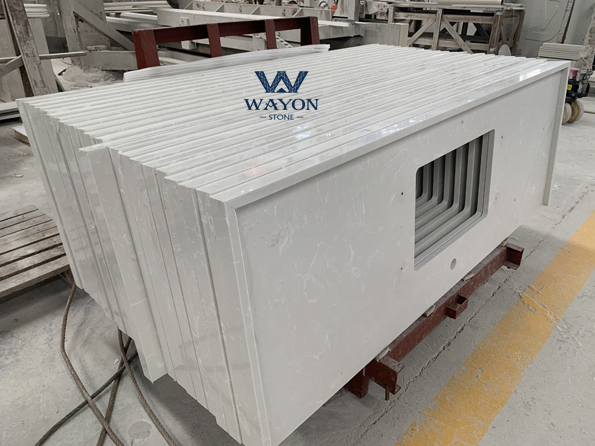
WAYON zero-silica quartz countertop
For stain resistance and maintenance, both materials are well suited to busy countertop environments. Properly manufactured surfaces have low porosity, helping limit the penetration of coffee, oil, sauces, and other common substances. Regular cleaning with appropriate products is generally sufficient for daily care.
Impact performance introduces another consideration. Surface hardness tells only part of the durability story. Countertop edges and corners are more exposed to concentrated impacts, so the material's fabrication characteristics and edge configuration deserve attention alongside its surface properties.
For everyday indoor countertops, zero silica quartz provides a well-balanced performance profile, while porcelain offers greater resistance where heat and surface hardness are primary priorities.
Edge Design and Fabrication Can Change the Better Choice
A countertop is shaped by more than the slab itself. Cutting, drilling, sink openings, corner details, and edge profiles all influence the finished result, making fabrication an important part of material selection.
Zero silica quartz fits naturally into many conventional countertop fabrication workflows. Its format allows fabricators to produce common edge treatments such as eased, rounded, and more substantial built-up profiles. This flexibility can be useful for residential kitchens, hospitality counters, and projects where the edge is an important part of the overall design.
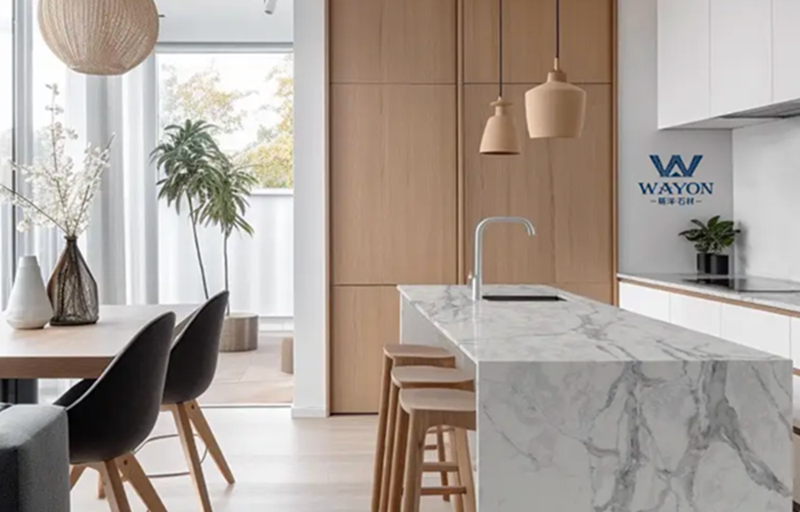
Porcelain offers different design possibilities. Its strength and thin-format options work particularly well for slim contemporary edges, mitered details, and waterfall applications. Large-format slabs can also create visually continuous surfaces with fewer visible joints.
The fabrication process requires greater technical precision with porcelain. Cutting, drilling, transportation, and installation benefit from appropriate tools, equipment, and installer experience. Sink cutouts and corners require careful handling because these areas concentrate stress during fabrication and installation.
For this reason, material selection should involve the fabricator at an early stage. A slab's performance characteristics and its fabrication requirements need to work together. The preferred material should support the specified edge profile, countertop dimensions, installation method, and available fabrication capabilities.
Matching the Countertop Material to Your Project
The best material often becomes clearer when the countertop's intended environment is considered first. Different spaces place different demands on the surface, so the same slab may offer distinct advantages across residential, outdoor, and commercial applications.
Indoor Residential Kitchens
Zero silica quartz is well suited to conventional indoor kitchens where balanced durability, low maintenance, and flexible edge detailing are important. Its familiar countertop format also works well with established fabrication workflows and a wide range of kitchen layouts.
High-Heat Cooking Areas
Porcelain has a stronger position in areas exposed to intense heat. Its high thermal resistance makes it suitable for demanding cooking environments where hot cookware and temperature fluctuations are regular considerations.
Outdoor Kitchens
Porcelain is generally the stronger choice for outdoor countertops. Its resistance to UV exposure, weather conditions, and temperature variation supports long-term use in exterior environments. Product specifications should still be reviewed for the intended installation conditions.
Commercial Countertops
Commercial projects require a broader assessment. Fabrication capacity, installation expertise, slab availability, edge specifications, maintenance requirements, and replacement planning can all affect the final choice. Zero silica quartz may suit projects built around conventional countertop fabrication, while porcelain can provide advantages where heat, UV exposure, or thin-format design takes priority.
Which One Offers Better Value for a Countertop Project?
Material price alone provides an incomplete view of countertop value. The final project cost also reflects fabrication, installation, transportation, maintenance, and the practical risks associated with the selected design.
Zero silica quartz can offer strong project value when a countertop follows familiar fabrication methods. Established processing techniques and flexible edge options can simplify production for projects using conventional countertop details. This can be particularly useful when multiple pieces require consistent dimensions and finishing.
Porcelain can deliver excellent value in applications where its technical strengths directly address project requirements. High heat resistance, strong surface hardness, UV stability, and thin-format design options can support applications that place greater demands on the countertop.
A useful way to evaluate the investment is to consider the total installed cost instead of the slab price alone. Fabrication complexity, installer availability, replacement considerations, and long-term maintenance all contribute to the final cost.
For buyers managing larger projects, obtaining fabrication and installation estimates alongside slab pricing provides a more accurate basis for comparison. The material with the lowest purchase price may not always provide the most efficient overall project solution.
Choosing the Right Countertop Material for Your Project
The choice between zero silica quartz and porcelain becomes clearer when the project's priorities are defined before selecting a slab.
Zero silica quartz is a strong fit when a project prioritizes:
- Everyday indoor countertop use
- Balanced durability and low maintenance
- Flexible edge profiles and countertop detailing
- Familiar fabrication processes
- Consistent quartz-style aesthetics
- Straightforward integration into conventional countertop projects
Porcelain is particularly well suited to projects that prioritize:
- High resistance to direct heat
- Maximum surface hardness
- Outdoor applications and UV exposure
- Thin, minimalist countertop profiles
- Large-format visual continuity
- Demanding thermal conditions
For many conventional indoor countertops, zero silica quartz provides a practical balance between surface performance, design flexibility, and fabrication convenience. Porcelain becomes especially compelling when heat, outdoor exposure, scratch resistance, or thin-format design carries greater weight.
The most suitable choice ultimately comes from matching the material's strengths with the countertop's actual operating conditions, fabrication requirements, and design specifications.
Why Consider Zero Silica Quartz for Your Next Countertop Project?
Zero silica quartz presents an attractive option for countertop projects that value the established characteristics of quartz while seeking a silica-free material solution. Its appeal lies in the balance between everyday surface performance, contemporary aesthetics, and fabrication flexibility.
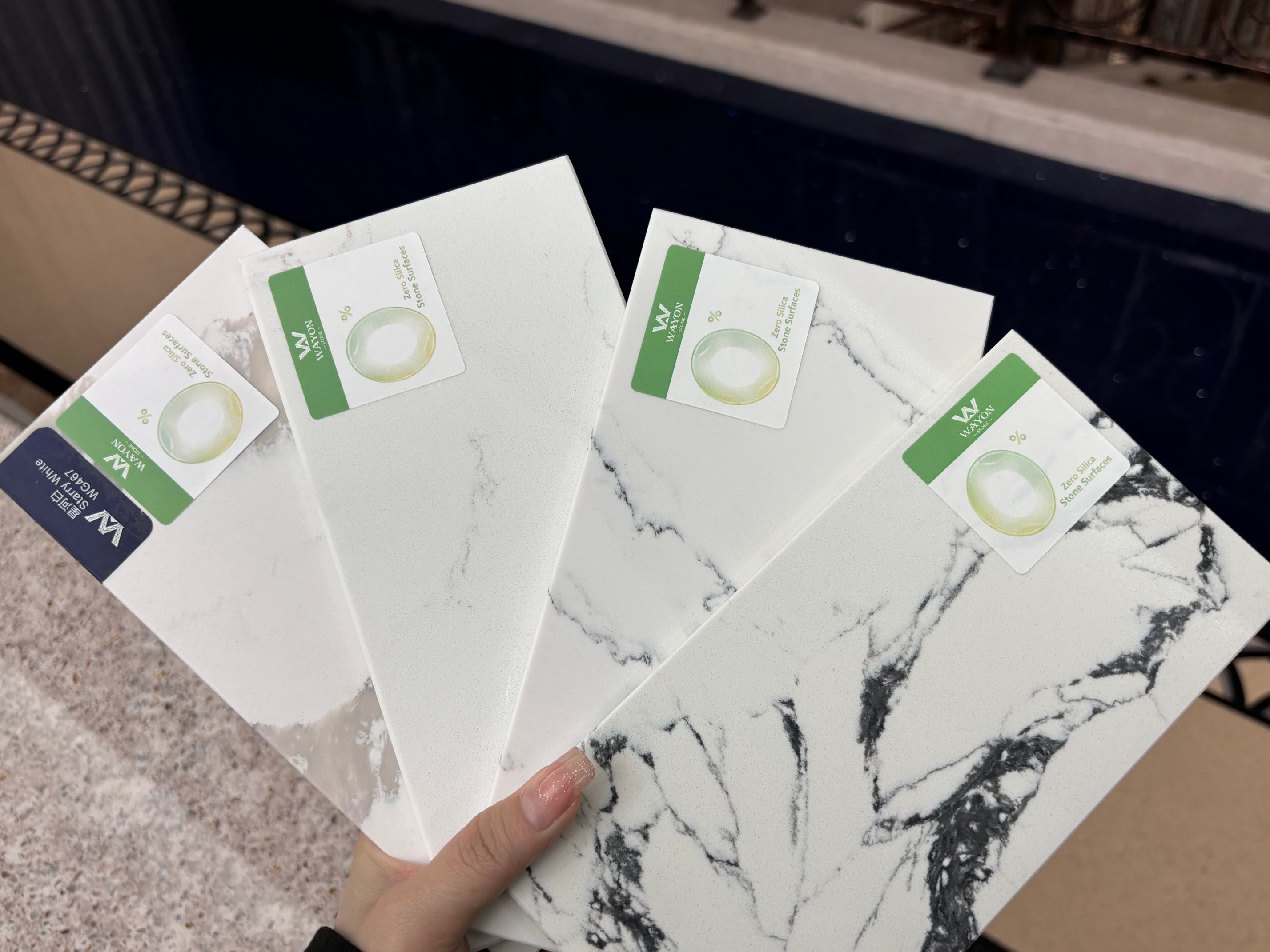
For countertop manufacturers, fabricators, distributors, and project suppliers, this combination can also support a broader product offering. Familiar slab formats and versatile design options make zero silica quartz suitable for residential and commercial countertop programs where consistent quality and efficient processing are important.
Wayon provides zero silica quartz slabs for projects seeking a modern alternative to conventional quartz. With different colors, patterns, finishes, and slab specifications available, the material can be developed around diverse countertop requirements.
For upcoming projects, contact Wayon to discuss slab specifications, samples, customization options, and suitable solutions for your target market.
Frequently Asked Questions
1. Is zero silica quartz better than porcelain for kitchen countertops?
It depends on the kitchen requirements. Zero silica quartz offers balanced everyday performance and flexible fabrication, while porcelain provides stronger heat and scratch resistance.
2. Which is more heat resistant, porcelain or zero silica quartz?
Porcelain generally provides higher heat resistance, making it well suited to countertops exposed to hot cookware and significant temperature changes.
3. Is porcelain more likely to chip than zero silica quartz?
Porcelain has excellent surface hardness, while its edges and corners require careful fabrication and handling. Edge design and installation quality can significantly influence chip resistance.
4. Can zero silica quartz be used for custom countertop edges?
Yes. Its fabrication characteristics support a range of common countertop edge profiles, including eased, rounded, and built-up designs, subject to the product specification and fabricator's capabilities.
5. Is porcelain suitable for outdoor countertops?
Yes. Porcelain is well suited to many outdoor applications because of its resistance to UV exposure, weather conditions, and temperature variation. The specific product should be checked for the intended installation environment.
6. Which material is easier to fabricate and install?
Zero silica quartz generally fits more familiar countertop fabrication workflows. Porcelain can require specialized tools, techniques, and installer experience, particularly for complex cuts, corners, and edge details.