

Quartz Stone vs Artificial Marble: Which Is Better for Your Project?
Choosing between quartz stone and artificial marble is not only a question of appearance or price. For architects, project contractors, and interior designers, the right material depends on where it will be installed, how the surface will be used, what visual effect the project requires, and how the material will perform after handover.
Both quartz stone and artificial marble are engineered stone materials, but they are designed for different priorities. Quartz stone is usually preferred for demanding functional surfaces, while artificial marble is often selected for decorative interiors that require a refined marble inspired look. Using Wayon’s quartz stone and artificial marble collections as reference examples, this guide compares the two materials from a commercial project and manufacturer perspective.
What Are Quartz Stone and Artificial Marble?
Quartz stone and artificial marble are both engineered stone materials, but they are made with different mineral bases and are suited to different project needs.
What Is Quartz Stone?
Quartz stone is an engineered surface made from quartz minerals, resin binders, pigments, and selected additives. Wayon Quartz Stone offers strong hardness, stain resistance, and daily wear performance, making it suitable for countertops, vanities, reception desks, laboratory surfaces, and other high use commercial areas.
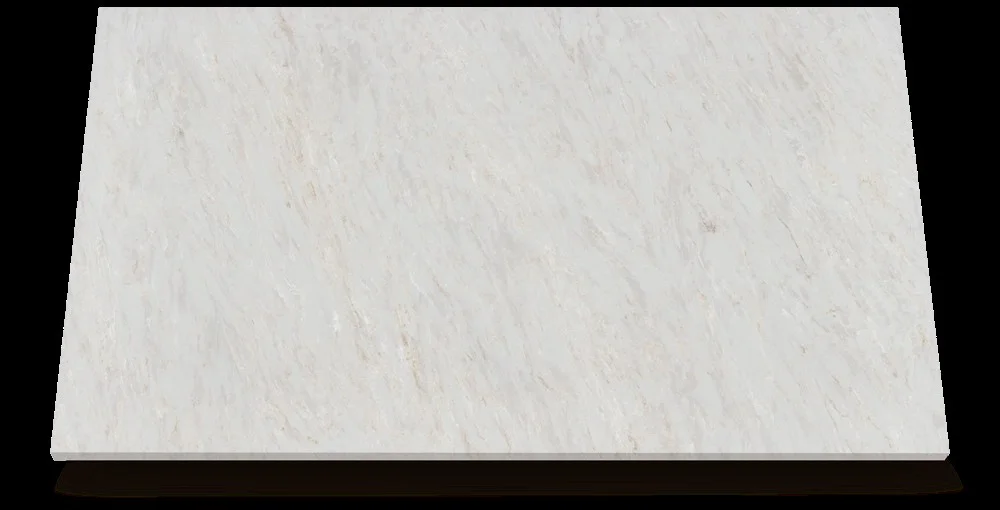
WAYON WG618 Taj Mahal Quartz Stone
What Is Artificial Marble?
Artificial marble is an engineered marble material made mainly from natural marble particles, resin binders, and pigments. Wayon Artificial Marble presents a marble inspired appearance with stable decorative value, making it suitable for interior walls, floors, bathrooms, corridors, lobbies, and commercial decorative surfaces.
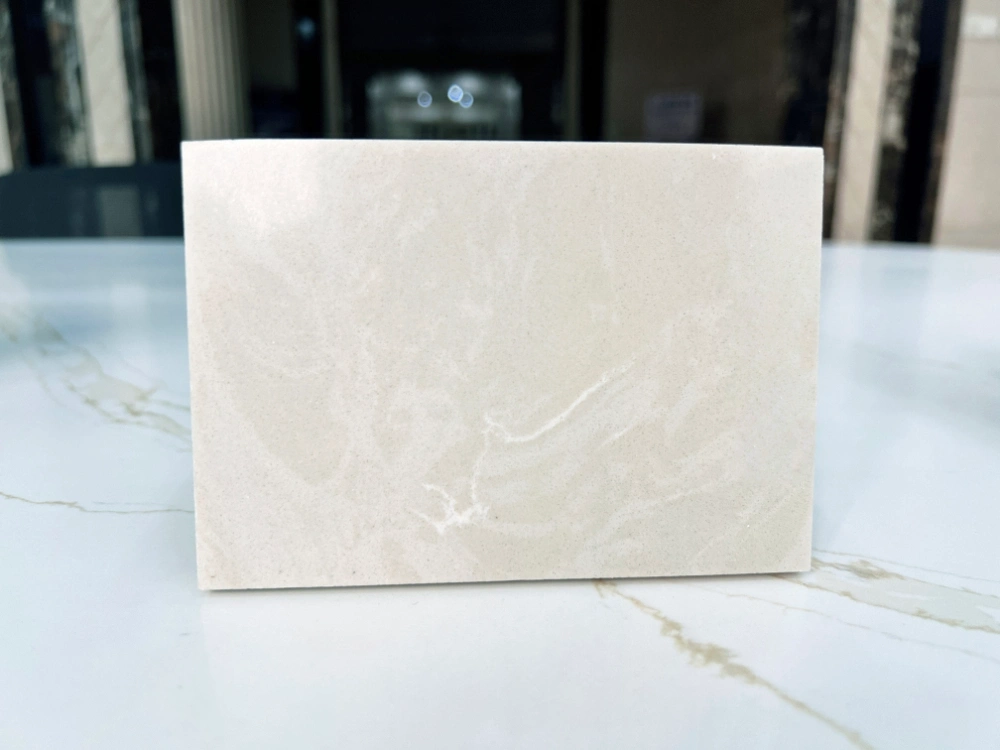
WAYON AM003 Isle Beige Artificial Marble
Quartz Stone vs Artificial Marble at a Glance
|
Comparison Factor |
Quartz Stone |
Artificial Marble |
|
Main composition |
Quartz minerals and resin |
Natural marble particles and resin |
|
Surface character |
Dense and performance oriented |
Elegant and marble inspired |
|
Scratch resistance |
Generally higher |
Suitable for normal interior use |
|
Stain resistance |
Strong under proper use |
Good with appropriate care |
|
Design direction |
Modern, minimal, stone inspired |
Classical, decorative, marble inspired |
|
Typical applications |
Worktops, counters, vanities, laboratories |
Walls, floors, lobbies, bathrooms |
|
Primary project value |
Functional surface performance |
Decorative coverage and cost balance |
In general, quartz stone is more suitable for performance-driven applications, while artificial marble is better for decorative coverage and visual design flexibility.
Key Differences Between Quartz Stone and Artificial Marble
When to Choose Quartz Stone vs Artificial Marble?
Choose Quartz Stone if:
- The surface will be used frequently (countertops, worktops)
- Strong scratch and stain resistance is required
- The project involves kitchens, labs, or service areas
- Long-term maintenance needs to be minimized
Choose Artificial Marble if:
- The project focuses on interior decoration and atmosphere
- Large wall or floor coverage is required
- A marble-inspired visual effect is preferred
- Budget balance is important
Material Composition and Surface Structure
The main difference comes from the mineral base. Quartz stone contains quartz minerals, which give the slab a dense structure and strong surface hardness. This is why quartz is widely used for worktops, counters, and surfaces that experience regular contact.
Artificial marble uses natural marble particles as its main mineral content. This gives the surface a softer marble inspired appearance, with a polished visual effect that works well in decorative interior applications. Although both materials are engineered stone, their surface behavior and best use scenarios are not the same.
Appearance and Design Flexibility
Quartz stone is often chosen for modern interiors that require a clean, durable, and controlled surface. It can be used in plain colors, fine aggregate patterns, crystal effects, or stone inspired veining. For offices, hotels, laboratories, retail spaces, and commercial kitchens, quartz offers a balance between design consistency and practical performance.
Artificial marble is more suitable when the project requires the elegant character of marble. It works well in hotel lobbies, corridors, commercial bathrooms, residential developments, shopping centers, and other spaces where visual atmosphere is important. Its decorative value makes it attractive for designers who want a marble look without relying entirely on natural stone.
Lighting should also be considered during selection. Gloss level, vein movement, and color depth may appear different under warm light, natural daylight, or commercial lighting. For important projects, designers should review physical samples together with full slab images before confirming the final material.
Hardness, Scratch Resistance, and Daily Wear
Wayon quartz stone has a Mohs hardness of approximately 6 to 7. This makes it a practical choice for surfaces that need to resist daily abrasion, cleaning, movable objects, and frequent use. In project environments, this can include kitchen countertops, hotel vanity tops, reception desks, laboratory counters, and service areas.
Artificial marble also performs well in many interior applications, but it is usually not selected for the same level of intensive surface use as quartz. It is better suited to walls, floors, bathroom surfaces, decorative panels, and areas where appearance and overall interior effect are the main priorities.
This does not mean artificial marble is a lower quality material. It simply means the two products serve different design and performance needs. Quartz is more performance led, while artificial marble is more decorative and space oriented.
Technical parameters such as Mohs hardness, water absorption, and surface density are important indicators when specifying engineered stone materials for commercial use.
Stain Resistance and Maintenance
Quartz stone has a dense surface that resists many common stains in commercial and residential environments. Spills from coffee, wine, oil, cosmetics, and food should still be cleaned promptly, especially in hotels, restaurants, and public facilities where surfaces are used frequently.
Artificial marble can also be maintained effectively with proper cleaning methods. The key is to avoid abrasive pads, unsuitable chemicals, and harsh cleaning routines that may affect gloss or surface appearance over time. For public projects, cleaning procedures should match the material finish and expected level of use.
Maintenance should be considered during the specification stage. A hotel bathroom, food service counter, office reception desk, and shopping mall floor all face different cleaning conditions, even if they look similar in the design renderings.
Heat, Chemicals, and Environmental Exposure
Quartz stone performs well in many interior applications, but it contains resin and should not be exposed directly to extreme heat. In kitchens and food service spaces, hot cookware or equipment should be placed on heat resistant pads instead of directly on the surface.
For laboratories, healthcare areas, and commercial kitchens, project teams should not rely on general claims such as easy to clean or chemical resistant. They should confirm whether the material can handle the specific disinfectants, acids, alkalis, cleaning agents, or food substances used in the space.
Artificial marble should also be evaluated according to the actual project conditions. If the surface will be exposed to long term moisture, intensive cleaning, unusual temperatures, or outdoor conditions, the supplier’s technical guidance should be checked before specification.
Which Material Works Better for Different Applications?
Different applications require different priorities. Quartz stone is stronger for high use surfaces, while artificial marble often works better for decorative interiors with broader visual coverage.
Kitchen and Commercial Food Service Countertops
Quartz stone is generally the stronger choice for kitchen countertops and commercial food service surfaces. Its hardness, stain resistance, and ease of daily cleaning make it suitable for areas where preparation, serving, and regular cleaning are part of daily operation.
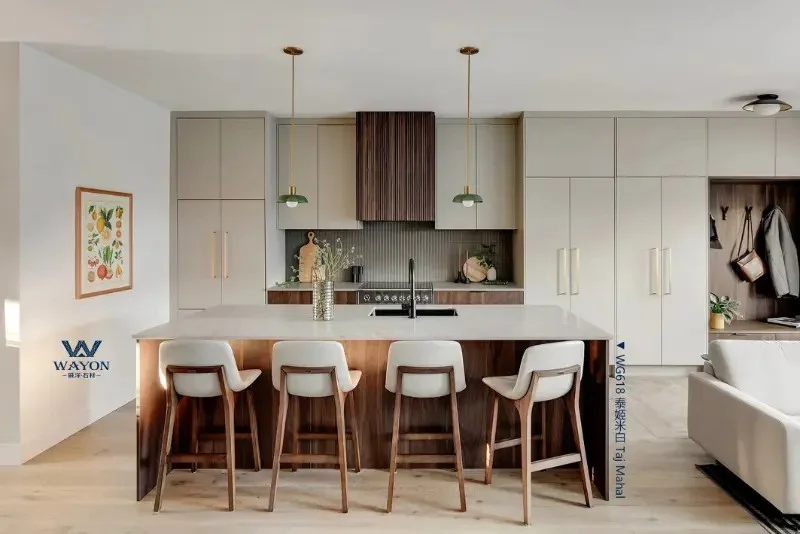
Artificial marble may be considered for decorative counter fronts, low intensity counters, or surfaces where visual effect is more important than heavy functional use. In food related projects, teams should also confirm food contact requirements, heat exposure, cleaning methods, and local standards.
Hotel Vanities and Reception Counters
Both quartz stone and artificial marble can be used in hotel projects, but their roles are different. Quartz is suitable for vanity tops, reception counters, bar counters, and other surfaces where guests, luggage, cosmetics, and cleaning products frequently come into contact with the material.
Artificial marble is a good option for vanity surrounds, lobby walls, decorative panels, and interior features that need a marble inspired effect. For hotels, the final choice should reflect brand positioning, expected service intensity, guest experience, and maintenance planning.
Interior Walls, Lobby Areas, and Decorative Surfaces
Artificial marble is often more suitable for large decorative interior areas. Its polished marble appearance can help create a refined atmosphere in lobbies, corridors, lift areas, retail stores, and commercial public spaces.
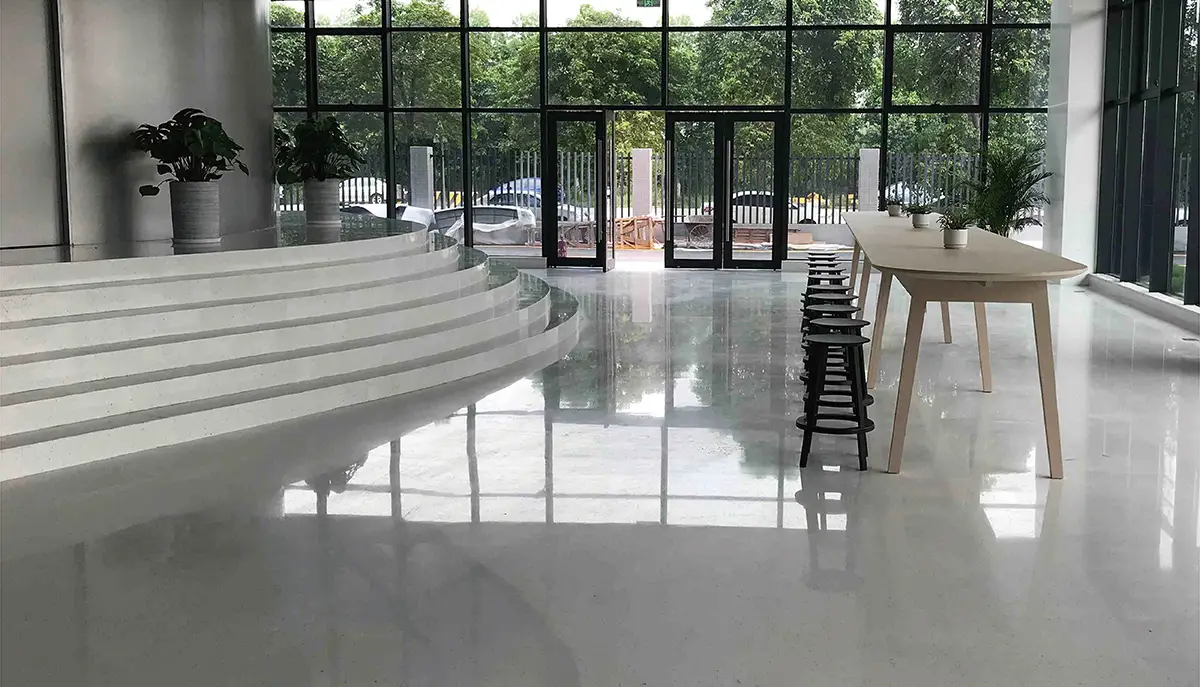
Quartz stone can also be used in these environments when the surface has both decorative and practical functions. For example, it may be used on reception desks, ledges, service counters, display platforms, and other areas that require stronger surface performance.
Commercial Flooring and Public Areas
Artificial marble can be used for interior flooring when its technical properties meet the project’s traffic and safety requirements. Before approval, architects and contractors should evaluate abrasion resistance, slip resistance, slab thickness, substrate condition, finish, and cleaning plan.
Flooring decisions should not be based only on surface appearance. Dry corridors, shopping areas, entrance zones, and wet areas may require different finishes and safety performance, even when the same material family is being considered.
Laboratories, Healthcare, and Educational Projects
Quartz stone is generally more suitable for laboratory tops, nurse station counters, school worktops, and healthcare surfaces that require frequent cleaning and dependable daily performance. However, specific chemicals and disinfectants should still be checked against technical data before final use.
Artificial marble can support decorative areas in these projects, such as walls, reception features, corridors, and public surfaces. This allows quartz to handle demanding work zones while artificial marble contributes to the overall interior design.
Furniture and Custom Fabricated Elements
Both materials can be fabricated into furniture surfaces, service desks, cabinet tops, table surfaces, and custom interior elements. Quartz is more suitable when the furniture surface needs stronger wear resistance, while artificial marble works well for decorative pieces with a marble inspired look.
Designers should also consider edge details, cutouts, support structure, slab weight, transportation, and installation access. These practical factors can influence whether a design is easy to produce and install.
How Architects, Contractors, and Designers Should Choose
Architects should begin with performance requirements and compliance. The specification should define the application area, material thickness, finish, edge treatment, fixing method, substrate condition, and any required standards related to fire, slip resistance, hygiene, or food contact.
Contractors need to focus on fabrication and site execution. Slab dimensions, cutouts, access routes, support details, installation sequence, joint positions, and protection after installation should be reviewed before production and delivery.
Interior designers should review both the small sample and the larger visual effect. A small sample shows color and finish, but a full slab image or large sample helps evaluate veining, pattern movement, gloss, and visual weight in the actual space.
Before confirming the material, the project team should answer several questions.
- Where will the material be installed?
- How often will the surface be used or cleaned?
- What visual atmosphere should the material create?
- What fabrication and installation conditions apply?
- What technical reports or certifications are required?
Can Quartz Stone and Artificial Marble Be Used in the Same Project?
Many commercial projects do not need to choose only one material. A hotel, office building, commercial complex, or residential development can use quartz stone and artificial marble in different areas according to functional needs.
For example, quartz stone can be used for kitchen countertops, bathroom vanity tops, reception desks, bar counters, and work surfaces. Artificial marble can be used for lobby walls, corridors, decorative panels, flooring, and bathroom surrounds.
This approach helps balance durability, visual effect, and project budget. The design team should still coordinate color tone, gloss level, edge details, joint treatment, and adjacent materials, so the final interior feels intentional and consistent.
Why Material Samples and Technical Data Matter
Website images are useful during early research, but they cannot fully show surface texture, reflectivity, color depth, or pattern scale. Digital screens and project lighting may also change how the material appears.
Before issuing a final specification, project teams should request physical samples, slab images, available dimensions, thickness options, fabrication guidance, and relevant technical reports. Useful data may include hardness, water absorption, abrasion resistance, stain resistance, chemical resistance, slip performance, and fire related testing when applicable.
Wayon can support project evaluation with samples, product information, and material recommendations based on application needs. Providing drawings, preferred colors, thickness requirements, estimated quantity, project location, and performance expectations will help the supplier offer more accurate guidance.
Quartz Stone or Artificial Marble: Final Recommendation
Quartz stone is generally the better option for countertops, worktops, laboratory surfaces, vanities, service counters, and furniture surfaces exposed to frequent use. Its hardness and stain resistance make it suitable for areas where long term daily performance is important.
Artificial marble is especially valuable for interior walls, lobbies, corridors, floors, bathrooms, and decorative features where a marble inspired appearance is central to the design. It can help create an elegant interior atmosphere while supporting project cost control.
For project specific recommendations, contact Wayon with the application areas, drawings, preferred colors, thickness requirements, estimated quantities, technical standards, and delivery destination.
Frequently Asked Questions
Is artificial marble the same as quartz stone?
No. Quartz stone is mainly made with quartz minerals, while artificial marble is mainly made with natural marble particles. Both are engineered stone materials, but they differ in hardness, appearance, surface behavior, and suitable applications.
Which is more durable, quartz or artificial marble?
Quartz stone generally offers higher scratch resistance and is better suited to frequently used work surfaces. Artificial marble is durable enough for many interior walls, floors, bathroom areas, and decorative applications when properly specified and maintained.
Is quartz stone more expensive than artificial marble?
Quartz stone is often positioned higher than artificial marble, but there is no fixed price difference. Cost depends on color, pattern, thickness, slab size, finish, fabrication complexity, order quantity, packaging, and transportation.
Which material is better for commercial countertops?
Quartz stone is usually the preferred choice for commercial countertops because it offers stronger hardness, stain resistance, and daily cleaning performance. Artificial marble may be suitable for decorative counters or low intensity surfaces where appearance is the main priority.
Can artificial marble be used for flooring?
Yes, artificial marble can be used for suitable interior flooring applications. The project team should confirm traffic level, abrasion resistance, slip resistance, thickness, substrate condition, finish, and cleaning method before final approval.
Can quartz stone and artificial marble be used outdoors?
Indoor quartz stone and artificial marble should not automatically be specified for outdoor use. Before exterior application, confirm ultraviolet resistance, weathering performance, temperature limitations, and recommended installation methods with the manufacturer.
Which material is easier to maintain?
Quartz stone is generally easier to maintain on demanding work surfaces because of its dense structure and stain resistance. Artificial marble can also be maintained efficiently when suitable cleaning products and care procedures are used.
What information is needed for a project quotation?
Provide project drawings, application areas, preferred colors, finish, dimensions, thickness, edge details, cutouts, estimated quantity, installation location, required standards, destination, and expected delivery schedule. This helps Wayon prepare a more accurate material and fabrication proposal.
Which material is better for hotels, quartz or artificial marble?
Quartz stone is better for vanity tops and counters, while artificial marble is suitable for lobby walls, corridors, and decorative areas.
Can quartz replace artificial marble in all applications?
Not always. Quartz is better for functional surfaces, while artificial marble remains a strong choice for decorative interiors.
Conclusion
Looking for a reliable engineered stone manufacturer for your project?
Wayon Stone provides quartz stone and artificial marble with OEM & ODM support, custom fabrication, and global project supply. Contact us for samples, technical data, and project consultation.